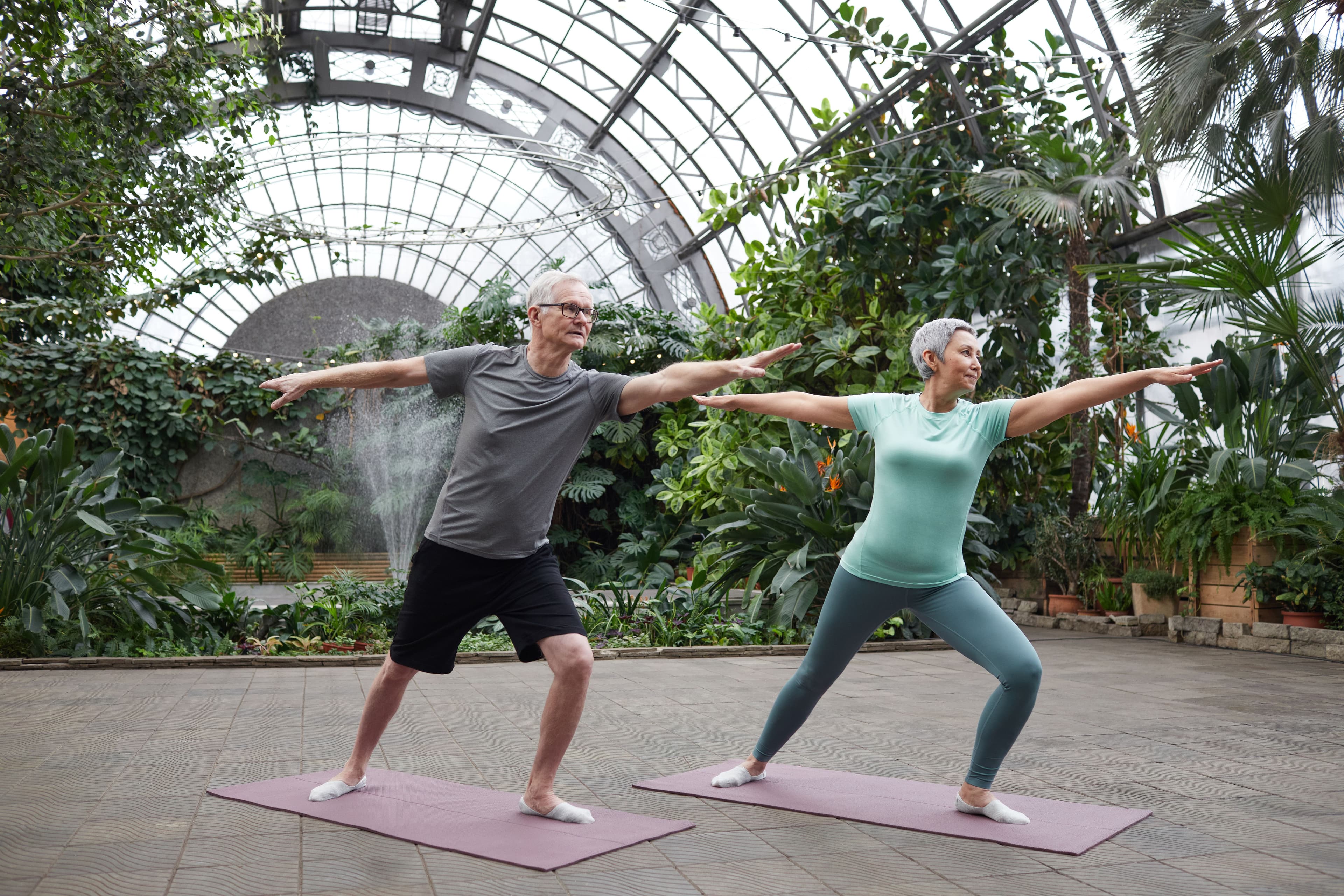
The Painful Paradox: When Movement Hurts but Stillness Makes It Worse
If you have arthritis, you will know this dilemma well. Your joints ache. Movement makes them hurt. So you rest — and they stiffen. You move again, and it hurts more than before. Over time, the range of motion you once had quietly narrows, the muscles around the joint weaken, and what began as protective rest becomes a cycle that deepens the problem.
This is not a failure of willpower. It is a physiological trap that most people with arthritis fall into, often with the best intentions. The instinct to protect a painful joint is entirely natural. But the science is clear: for most people with osteoarthritis or rheumatoid arthritis in a stable phase, appropriate movement is one of the most effective treatments available. The challenge is finding movement that is genuinely safe, genuinely gentle, and genuinely sustainable.
Tai Chi has emerged as one of the most compelling answers to that challenge. It is not a soft option or a compromise. It is a practice that, when examined carefully, addresses the specific physiological problems that make arthritis worse — without adding the mechanical stress that makes other exercises inappropriate.
Why Arthritis Makes Movement Harder — and Why That's the Problem
To understand why Tai Chi helps, it is worth understanding what is actually happening in an arthritic joint — and why inactivity makes each of these mechanisms worse.
Healthy joints are lubricated by synovial fluid, a viscous liquid that reduces friction between cartilage surfaces. This fluid is not pumped into the joint from elsewhere — it is produced and circulated by the movement of the joint itself. When you are sedentary, synovial fluid circulation slows. The joint becomes less lubricated, cartilage receives less nutrition, and the stiffness that makes the first steps of the morning so painful is partly a consequence of this.
Around the joint, the muscles that normally support and stabilise it weaken with disuse. Weak quadriceps, for example, transfer more load directly onto the knee joint surfaces rather than absorbing it through muscle contraction. This increases pain and accelerates cartilage wear — the opposite of what a protective response would achieve.
Arthritis also affects proprioception — the body's ability to sense the position and movement of its own joints. Research has consistently shown that proprioceptive deficits are present in both osteoarthritis and rheumatoid arthritis, particularly at the knee and hip. When proprioception declines, the body's ability to distribute load appropriately across a joint deteriorates, and the risk of compensatory movement patterns — which cause pain elsewhere — increases.
The body's response to all of this is guarding: a subconscious tensing of muscles around the painful joint to protect it from further insult. In the short term, this is sensible. In the long term, constant guarding leads to altered movement patterns, secondary muscle tightness, and reduced range of motion — none of which are compatible with recovery or management. The joint becomes progressively more restricted, and the pain cycle deepens.
This is the physiological context in which Tai Chi intervenes. And understanding this context makes it clear why Tai Chi is not merely pleasant exercise — it is mechanistically matched to what arthritic joints actually need.
What Makes Tai Chi Different for Arthritis
Most forms of exercise fall into one of two categories: high-impact activities that load joints too aggressively for arthritis, or gentle activities (swimming, stretching) that are kind but do not build the strength and proprioception the joint actually needs. Tai Chi occupies a third category — slow, non-impact, full range of motion through each joint, with no jerking, no sudden loading, and no high mechanical stress.
Every Tai Chi movement flows. There are no sudden accelerations, no high-velocity transitions, no moments where the body is subjected to forces it cannot prepare for. The pace is slow enough that the nervous system is always ahead of the movement, and the muscles are always working in a smooth, controlled way. For a joint that has been guarding against unpredictable load, this quality alone is profoundly reassuring — both physiologically and psychologically.
But the specifics of how Tai Chi helps go beyond the general quality of the movement.
Synovial fluid circulationTai Chi takes every major joint through its full available range of motion, repeatedly, in a slow and controlled manner. This is exactly the stimulus the joint needs to circulate synovial fluid, nourish cartilage, and reduce the stiffness that follows prolonged rest. Unlike static stretching, which moves a joint to end range and holds it there, Tai Chi moves continuously — which means the pumping action on synovial fluid is sustained throughout the practice.
Muscle strengthening around the jointThe semi-squat positions, slow weight shifts, and single-leg moments in Tai Chi build strength in the quadriceps, gluteal muscles, and hip stabilisers — the very muscles most important for protecting the knee and hip joints. Unlike resistance training, this strengthening occurs without high-load, high-impact stress on the joint surfaces. The muscles are trained through movement the joint can tolerate, and the result over weeks of practice is measurably improved joint stability.
Proprioceptive retrainingThe slow, weight-shifting, single-leg balance work that characterises Tai Chi is one of the most effective forms of proprioceptive training available. The practice demands constant attention to where the body is in space, how weight is distributed, and how the body adjusts to maintain balance. Over time, this retrains the proprioceptive pathways that arthritis has compromised — improving the joint's ability to sense and respond to load in real time.
Releasing the guarding responseTai Chi is explicitly a practice of song — the ability to release unnecessary tension. Learning to move without bracing, without gripping, without holding the breath — these are skills taught deliberately in Tai Chi. For someone whose nervous system has been in a protective guarding state for months or years, learning to let go of unnecessary tension around an arthritic joint can be genuinely transformative. It is not quick, but it is real.
See also our post on how muscle loss after 50 affects joint health and balance, which explores the relationship between sarcopenia and joint pain in more depth.
If you'd like to learn Tai Chi properly — step by step, from individual movements into a flowing set that relieves joint pain and builds balance — we have a free course — Tai Chi: The Art of Moving Meditation.
The Evidence
The research base for Tai Chi in arthritis management is substantial and continues to grow. The most robust evidence comes from two overlapping bodies of research: the Tai Chi for Arthritis programme and the broader literature on Baduanjin and other Qigong forms.
The Tai Chi for Arthritis programme, developed by Dr Paul Lam in collaboration with the Arthritis Foundation and evaluated in partnership with Michigan State University, is the most widely implemented Tai Chi programme specifically designed for people with arthritis. It has been validated in multiple randomised controlled trials and is now delivered through the Arthritis Foundation in community settings across the United States. The trials consistently showed significant reductions in pain, stiffness, and disability in people with knee and hip osteoarthritis, alongside improvements in balance and physical function.
The Baduanjin — the Eight Brocades — is a Qigong form with a substantial evidence base of its own. A 2016 systematic review and meta-analysis published in Medicine found that Baduanjin practice produced significant improvements in joint mobility, pain scores, and functional capacity in people with musculoskeletal conditions including arthritis. The improvements in both pain and range of motion were consistent across multiple independent trials.
Importantly, the effect sizes in these trials are clinically meaningful — not just statistically significant. Participants reported reductions in pain that made daily activities noticeably easier: getting up from a chair, walking up stairs, dressing in the morning. This is the level of change that matters to someone managing arthritis in real life.
It is worth being honest about what the evidence does and does not show. Tai Chi does not reverse structural joint damage. It does not rebuild cartilage. For people with severe disease causing significant structural change, it is a management tool, not a cure. But for the majority of people with mild to moderate osteoarthritis or rheumatoid arthritis in a stable phase, it is one of the most effective and sustainable management tools available — and one that carries essentially no adverse effects when practised appropriately.
For more on how movement supports bone health alongside joint health, see our post on Tai Chi for osteoporosis and bone density.
A Gentle Tai Chi Practice for Arthritic Joints
The following practice focuses on the joints most commonly affected by arthritis — wrists, shoulders, knees, hips, and ankles — and is designed to be accessible regardless of current pain levels. Each movement includes a modification for difficult days. Start with 10 minutes and build gradually.
Wrist circles (2 minutes). Sit or stand comfortably. Extend both arms in front of you, hands loose. Slowly circle the wrists outward — as large a circle as feels comfortable — for 60 seconds, then reverse direction. Keep the movement smooth and unhurried. On difficult days, reduce the size of the circle rather than stopping entirely; even small movement circulates synovial fluid and prevents stiffening. This is particularly useful first thing in the morning.
Shoulder rolls with breath (2 minutes). Roll the shoulders slowly forward in large circles — up, back, down, forward — coordinating each direction with a breath. Inhale as the shoulders rise and move back; exhale as they drop and move forward. Reverse after 60 seconds. The breath coordination is not incidental — it actively reduces the tension held in the shoulder girdle and neck. On a flare day, reduce the range of motion and focus entirely on the breath.
Slow partial knee bends (3 minutes). Stand with feet hip-width apart, hands resting lightly on a chair back for support if needed. Slowly bend the knees — not into a deep squat, but to the point where you can feel the quadriceps engaging — then slowly straighten. Take 4–5 seconds to descend, pause briefly, 4–5 seconds to return. This is the core movement for building quadriceps strength around the knee. On difficult days, reduce the depth to whatever range is pain-free; even a 10-degree bend delivers the strengthening stimulus.
Weight shifting (3 minutes). Stand with feet shoulder-width apart. Slowly shift your weight to the right foot, feeling the left foot lighten, then back to centre, then onto the left foot. Move as slowly as possible — this is a proprioceptive exercise, not a balance challenge. As confidence grows, increase the range of the shift until you are briefly in single-leg balance before returning to centre. This movement specifically retrains the proprioceptive pathways at the hip and knee. On a flare day, perform the same movement seated — shifting weight from one sitting bone to the other.
Ankle circles (2 minutes). Seated in a chair, extend one leg and slowly circle the ankle — full, smooth circles, making the circle as large as comfortable. Reverse direction after 30 seconds, then switch feet. This movement is particularly important for people whose ankle stiffness affects their gait and balance. It can also be performed standing, with one hand on a wall or chair for support. On difficult days, seated is always appropriate.
End every practice with 2–3 minutes of slow, deliberate breathing — in through the nose, out through the mouth. This is not a cooldown formality. For arthritic joints, the cortisol reduction that accompanies slow breathing has measurable anti-inflammatory effects, and ending the practice this way reinforces the association between movement and ease rather than movement and pain.
For more on how confidence in movement relates to joint health and fall risk, see our post on fear of falling and how Tai Chi rebuilds confidence.
Managing Flare-Ups: When to Rest, When to Move
This is the most important section for anyone with inflammatory arthritis, and it requires honesty. There are days when movement is appropriate, and there are days when it is not. Getting this distinction right is what allows Tai Chi to be a sustainable long-term practice rather than something that causes harm.
Signs that you should not practise full movement today: significant joint swelling, warmth to the touch, redness around the joint, pain that is markedly worse than your baseline. These are signs of active inflammation — the joint is in a phase where it needs rest and, if relevant to your condition, medical management. Pushing through acute inflammation does not build resilience. It prolongs the flare.
On flare days, the appropriate practice is breathwork and gentle seated movement only. Slow breathing — 4 counts in, hold for 2, 6 counts out — activates the parasympathetic nervous system and reduces the inflammatory stress response. Seated wrist circles and very gentle shoulder movements within a pain-free range maintain circulation without stressing the inflamed joint. This is not doing nothing — it is appropriate movement for the current state of the body.
On good days, 10–15 minutes of the practice above is enough to deliver the therapeutic benefit. More is not necessarily better — particularly early in building a practice. Consistency over months matters far more than intensity on any given day.
A useful rule of thumb: movement during Tai Chi should not increase pain beyond a 3 out of 10 on a scale where 10 is the worst pain imaginable. If a movement takes you above that threshold, reduce its range or skip it that day. The goal is to stay just inside the edge of what is tolerable — not to push through it.
If you are on disease-modifying medications for rheumatoid arthritis, speak with your rheumatologist before beginning any new exercise programme. Most will actively encourage gentle movement, but they may have specific guidance relevant to your medication or joint condition.
Frequently Asked Questions
Is Tai Chi safe with rheumatoid arthritis?
For most people with rheumatoid arthritis in a stable or low-activity phase, Tai Chi is not only safe but actively beneficial. The key distinction is between stable disease and an active flare. During a flare, rest and medical management take priority. During stable phases, gentle movement such as Tai Chi supports joint health, reduces stiffness, and helps maintain the range of motion and muscle strength that protect affected joints. If you are unsure about your current disease activity, speak with your rheumatologist before beginning.
How is Tai Chi different from yoga for arthritis?
Both Tai Chi and yoga can be beneficial for arthritis, but they differ in ways that matter for some people. Yoga often involves holding poses at end range — which can be problematic for inflamed or hypermobile joints — and some styles involve deeper ranges of flexion or extension than arthritic joints can comfortably manage. Tai Chi is continuous movement through mid-range, never holding at end range, with no high-load positions. For this reason, many people with arthritis find Tai Chi easier to adapt to their current level of joint function. That said, gentle yoga with a skilled teacher who understands joint conditions can also be valuable.
What if my knees are too painful to do standing exercises?
All of the movements in this post can be modified for a seated position. Seated wrist circles, shoulder rolls, ankle circles, and weight shifts through the sitting bones are all accessible from a chair and deliver real therapeutic benefit. As knee pain improves — which it often does over weeks of gentle practice — you can begin to introduce standing movements, starting with the lightest range of motion and gradually building. Never start in a position of pain and push through it; start from a position of comfort and gently explore the edge.
How long until I feel a difference in my joints?
The honest answer is: it depends. Many people notice a reduction in morning stiffness within 2–4 weeks of regular gentle practice — particularly if the practice includes the wrist and ankle circles first thing in the morning. Meaningful improvements in pain, strength, and range of motion typically take 8–12 weeks of consistent practice. The Tai Chi for Arthritis programme trials typically ran for 12 weeks and showed significant results at that timepoint. The key variable is consistency — a 10-minute daily practice will produce better outcomes than a 45-minute practice once a week.