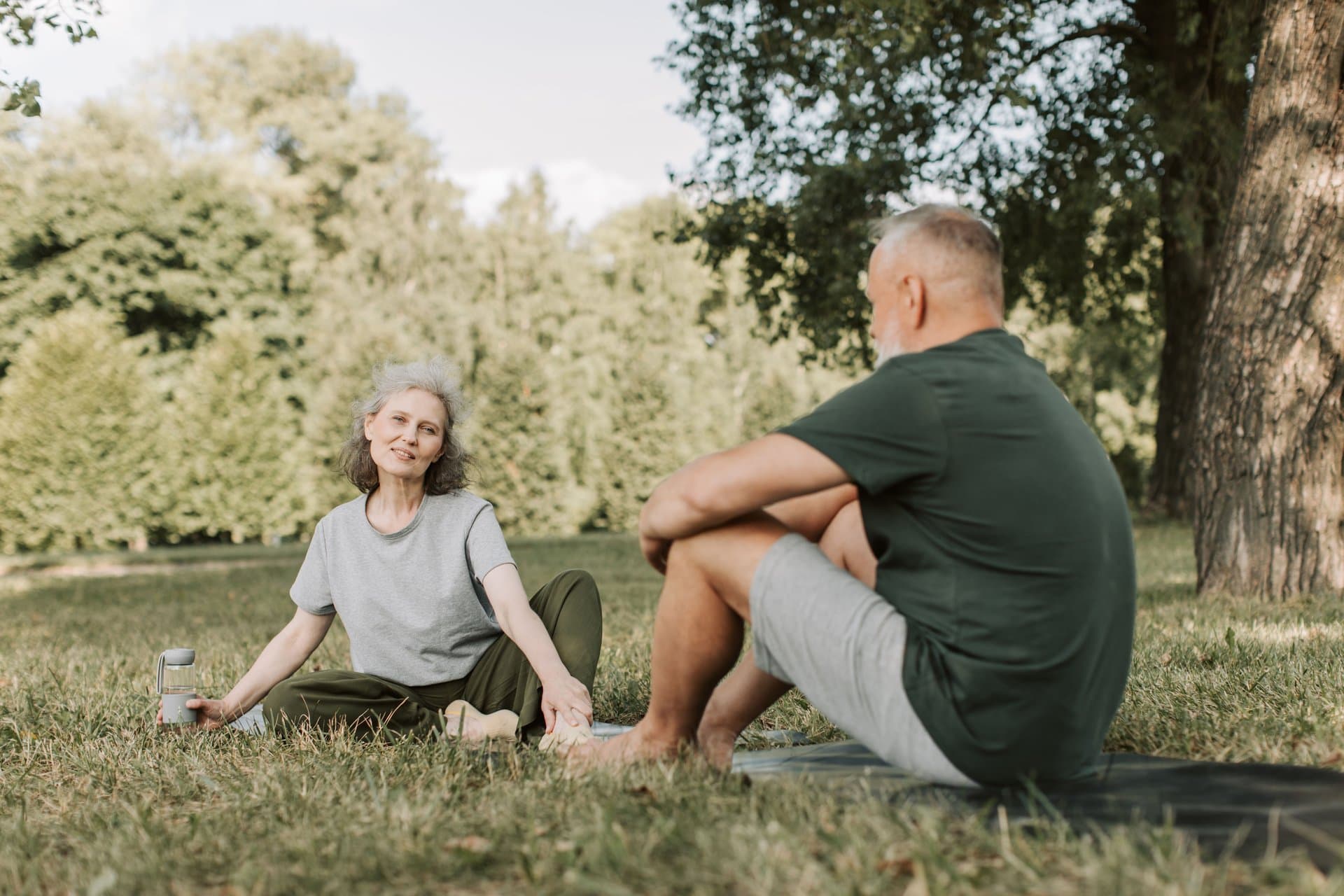
As we get older, we may notice that getting up from a chair feels different, our shoulders feel stiffer in the morning or turning to look behind us takes a little more effort.
It is tempting to attribute all these changes to ageing fascia.
Fascia is the connective tissue that surrounds and supports muscles, organs, nerves and other structures throughout the body. It helps tissues glide in relation to one another and contributes to the way the body handles movement and tension.
Ageing can affect connective tissues, but stiffness is rarely explained by one tissue alone. Activity levels, strength, joint health, previous injuries and other factors also play important roles.
Understanding fascia can help you take a more balanced approach to movement as you get older.
What Is Fascia?
Fascia is a network of connective tissue found throughout the body.
It surrounds muscles and organs, connects different structures and helps support the tissues that allow you to move.
Fascia contains collagen and other components that contribute to its strength, flexibility and ability to respond to mechanical forces.
Some layers of fascia allow neighbouring tissues to glide against each other during movement. Other parts provide support and help distribute forces through the body.
Although fascia is often discussed as if it were one single sheet of tissue, it includes different structures with different functions.
This matters because changes affecting one area of fascia may not have the same effects as changes elsewhere.
Does Fascia Change With Age?
Connective tissues can change as the body ages.
Collagen, which contributes to the strength and structure of fascia, is continually remodelled by the body. The balance between tissue breakdown and rebuilding can change over time.
Ageing can also affect the properties of connective tissues, while factors such as inflammation, injury, health conditions and reduced activity may influence how tissues function.
However, it would be too simple to say that fascia inevitably becomes tight, dry or damaged with age.
There is still much to learn about the precise effects of ageing on different types of fascia in living humans. Some popular claims about fascia ageing go beyond what research can currently establish.
It is also important to remember that stiffness is not proof of a fascia problem.
Joint conditions, muscle weakness, changes in physical activity, pain sensitivity and many other factors can affect how movement feels.
For a broader look at how movement and exercise can support connective tissue, read our guide to fascia training.
Why Might You Feel Stiffer as You Get Older?
Several everyday changes can contribute to a feeling of stiffness.
One is spending more time in the same position. When you sit for long periods, you get fewer opportunities to move your joints and muscles through different ranges of motion.
Another is losing strength or physical conditioning if you become less active.
Previous injuries or painful joints can also change the way you move. You may unconsciously avoid certain positions, use one side more than the other or develop habits that make some movements feel less comfortable.
Connective tissue is part of this picture, but it is only one part.
That is why an approach based solely on releasing fascia may miss other important contributors to stiffness.
A combination of regular movement, suitable strength exercises and attention to comfortable mobility is generally more useful than trying to fix one tissue in isolation.
Can Movement Help Keep Fascia Healthy?
Movement exposes your tissues to different forces and allows your muscles, joints and connective tissues to work together.
Walking, reaching, turning, stretching and resistance exercise all create different demands on the body.
Over time, appropriate physical activity can help maintain muscular strength, coordination and the ability to perform everyday movements.
Movement can also provide opportunities to explore comfortable ranges of motion, which may help you feel less restricted after periods of inactivity.
There is no single fascia exercise that everyone needs to perform.
The best approach depends on your current ability, interests and health needs. Some people enjoy walking, while others prefer gentle mobility work, strength training, Qi Gong or Tai Chi.
The aim is not to manipulate every part of your fascia. It is to maintain a varied, sustainable pattern of activity that supports the body as a whole.
Why Does Your Body Sometimes Feel Tight After Rest?
Have you ever stood up after a long period of sitting and felt as though your back, hips or shoulders needed time to loosen up?
This experience can have several explanations.
Remaining in one position for a long time means you have not been moving your joints and muscles through their usual ranges. When you start moving again, your body may initially feel less comfortable or coordinated.
Pain, inflammation, joint conditions and previous injuries can also influence stiffness.
Gentle movement often helps because it gradually introduces activity rather than asking your body to move quickly from rest to a demanding task.
Try standing up, walking for a few minutes and gently moving your shoulders before returning to your usual activities.
The aim is not to force a stretch or produce a dramatic release. It is to make the transition from inactivity to movement more comfortable.
Does Stretching Help Fascia?
Stretching can help improve flexibility and, when practised appropriately over time, may increase the range of motion you can comfortably achieve.
However, stretching should not be described as automatically breaking up adhesions or permanently releasing fascia.
Connective tissues respond to mechanical loading, but the effects depend on the tissue, the type of activity, the amount of force used and the time involved.
For many people, gentle stretching is valuable because it offers a simple opportunity to move a joint through a comfortable range.
If stretching causes sharp pain or makes symptoms worse, do not force the movement.
You may benefit from adjusting the position, reducing the intensity or choosing a different activity.
A Simple Daily Movement Practice
You do not need an elaborate routine to include more movement in your day.
Start by standing or sitting in a comfortable position.
Slowly roll your shoulders backwards a few times, keeping the movement gentle.
Raise your arms towards a comfortable height and lower them again.
Turn your upper body slightly from side to side without forcing the movement.
If it feels comfortable, walk for a few minutes and allow your arms to swing naturally.
Notice whether one movement feels easier than another, but do not assume that differences indicate damage.
Repeat the movements at a comfortable pace, adjusting them to suit your ability.
If you prefer guided practices, our free Senior Wellness Program combines accessible movement, balance, strength, sleep and other practical health topics for adults over 50.
The Role of Strength as You Age
Maintaining strength becomes increasingly important as we get older.
Muscles help you stand up from a chair, climb stairs, carry shopping and maintain stability as you move.
Appropriate strength training also places mechanical demands on connective tissues, encouraging the body to adapt over time.
This does not mean you need to lift heavy weights or train like an athlete.
Depending on your current ability, strength work might involve sit-to-stand exercises, supported squats, resistance bands or weights.
The important points are to begin at a suitable level, use controlled movements and build gradually.
If you have a health condition or a history of significant pain or injury, seek advice about the right exercises for you.
When Should You Seek Advice About Stiffness?
Occasional stiffness after resting is common, but persistent or worsening symptoms deserve attention.
Seek medical advice if stiffness is accompanied by significant pain, swelling, warmth, unexplained weakness or a noticeable loss of function.
Sudden severe pain or sudden weakness requires prompt assessment.
A healthcare professional can help identify whether symptoms are related to joints, muscles, connective tissues or another cause.
Knowing what is contributing to the problem makes it easier to choose suitable treatment and activity.
Bringing It All Together
Fascia is an important part of the body's connective tissue network, and connective tissues can change as we age.
But ageing does not automatically mean your fascia is damaged or that every stiff area needs releasing.
Your experience of movement is influenced by many factors, including strength, activity levels, joints, injuries and general health.
Regular walking, suitable strength work and comfortable mobility exercises can help you maintain the abilities you use in everyday life.
Rather than chasing a perfect fascia routine, focus on moving regularly, building strength gradually and choosing activities you can sustain.
The goal is not to stop your body from ageing. It is to keep giving it useful opportunities to move, adapt and remain active.
Frequently Asked Questions
Does fascia become tighter as you get older?
Connective tissues can change with age, but it is an oversimplification to say that fascia inevitably becomes tight. Stiffness can have many causes, including changes in activity, strength, joints and previous injuries.
Can you improve fascia health with exercise?
Exercise exposes connective tissues to mechanical loading and supports overall physical function. A varied routine that includes movement and appropriate strength work is a practical approach, although no single exercise has been proven to improve all fascia.
Is fascia responsible for morning stiffness?
Fascia may contribute to how tissues move, but morning stiffness can also involve joints, muscles, inflammation and other factors. Persistent or worsening stiffness should be assessed rather than automatically attributed to fascia.
Is stretching enough to keep fascia healthy?
Stretching can support flexibility and comfortable movement, but it is not a complete exercise programme. Strength training, walking and other forms of activity can complement it.