Fascia training is a term you may now see alongside mobility, stretching, recovery and movement.
But what exactly does it mean?
Fascia is a network of connective tissues that surrounds and connects muscles, organs, nerves, blood vessels and other structures throughout the body. It also plays a role in movement, force transmission and body awareness.
The term "fascia training" is now used to describe movement practices that pay more attention to this connective tissue system. It is not a single standardised exercise programme. Instead, it can include a mixture of stretching, flowing movements, strength work, gentle elastic movements, mobility exercises and practices that develop proprioception, or awareness of where your body is in space.
For many people, this makes fascia training less about working one muscle as hard as possible and more about learning to move the whole body well.
Why Is Fascia Important?
For a long time, fascia received less attention than muscles and bones.
We now know that it is much more than passive wrapping around the muscles. Fascial tissues are involved in transmitting forces between different parts of the body and contain sensory structures that contribute to movement awareness.
This helps explain why movement can sometimes be felt beyond the specific muscle or joint you are exercising.
For example, a movement involving your feet, legs and hips may also change how you feel through your back and shoulders because the body's muscles and connective tissues work together as a connected system.
That does not mean every sensation can be explained by fascia. The body is more complicated than that.
What Does Fascia Training Look Like?
There is no single "fascia exercise."
Instead, fascia-focused movement can involve several different characteristics.
Slow and Controlled Movement
Moving slowly gives you more time to notice your posture, breathing and physical sensations.
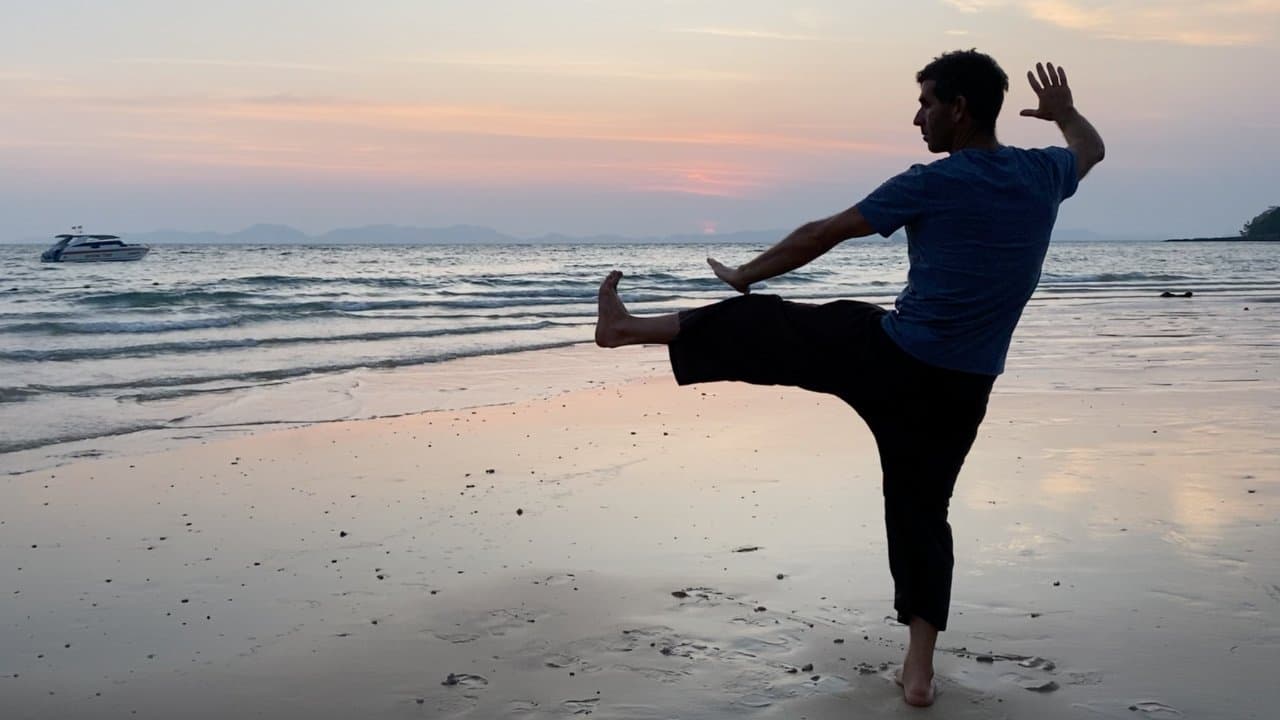
Qi Gong is a good example because movements are generally performed with relaxed, continuous motion rather than sudden effort.
Dynamic Stretching
Gentle dynamic movements take a joint through a comfortable range without holding a long static stretch.
Examples include controlled arm circles, gentle spinal rotations and flowing hip movements.
Elastic Movement
Some fascia-oriented training uses gentle springing or elastic actions, allowing the body to make use of its natural rebound.
This does not need to mean jumping or high-impact exercise. Small, comfortable movements can be enough.
Whole-Body Movement
Rather than isolating one area, fascia-focused movement often involves several parts of the body working together.
A simple reaching movement, for example, can involve your feet, legs, pelvis, spine, ribs and arms.
Body Awareness
This may be one of the most valuable aspects of fascia-focused movement.
Instead of simply completing repetitions, you pay attention to how the movement feels and whether unnecessary tension is appearing.
Can Fascia Training Improve Mobility?
There is evidence that stretching and movement can influence tissue stiffness and range of motion, although exactly how much of the change comes from fascia versus muscle, the nervous system and other tissues is still being investigated.
A 2024 controlled study found that five minutes of static stretching reduced measured stiffness in both muscle and deep fascia while also increasing ankle range of motion.
This is interesting, but it does not mean that stretching simply "breaks up" fascia or permanently changes the tissue after one session.
The body's response to movement is more complex than that.
A Gentle Way to Explore Fascia-Focused Movement
You do not need special equipment to explore this approach.
Try spending five minutes moving continuously and comfortably.
Start with a few slow shoulder circles.
Then gently rotate your upper body from side to side.
Add some arm movements, allowing your arms to swing naturally.
Move your hips gently from one side to the other.
Finish with a few slow weight shifts and relaxed breaths.
Rather than trying to stretch as far as possible, notice how your whole body participates in each movement.
If you prefer a guided morning practice, our free Morning Energy Flow course provides a simple way to combine gentle movement, breathing and meditation into a regular practice.
Do You Need Harder Exercise for Healthy Fascia?
Not necessarily.
Your connective tissues respond to mechanical loading, but that does not mean you need intense workouts to keep them healthy.
Walking, strength training, mobility work, stretching and flowing practices can all provide different types of movement and loading.
For someone who spends much of the day sitting, simply moving more often may be a valuable place to begin.
The aim is not to constantly "work the fascia."
It is to give your body a variety of movements rather than repeating the same positions and patterns all day.
Fascia Training as Part of a Bigger Practice
One reason fascia training fits naturally with practices such as Qi Gong and Tai Chi is that these disciplines already encourage whole-body movement, coordination and awareness.
You are not simply moving a joint or contracting a muscle.
You are learning to connect movement with breathing, balance and attention.
That broader approach can be particularly appealing if your goal is to feel more comfortable and connected in your body rather than simply becoming stronger or more flexible.
Bringing It All Together
Fascia training is best understood as a broad approach to movement rather than a single type of exercise.
It can include stretching, mobility, strength, flowing movement and body awareness.
The science around fascia is developing, and some of the more ambitious claims made about "fascia release" go beyond what research currently supports.
What we do know is that fascia is an important part of the body's connective and sensory systems, and movement can influence the mechanical properties of these tissues.
You do not need complicated techniques to explore it.
Move regularly.
Move in different directions.
Use a comfortable range.
Pay attention to your body.
And let movement become something you experience rather than simply something you complete.
Frequently Asked Questions
What is fascia training?
Fascia training is a broad term for movement approaches that consider the role of connective tissue alongside muscles, joints and the nervous system. It can include stretching, mobility, strength, elastic movement and body awareness.
Is fascia training the same as stretching?
No. Stretching can be part of fascia-focused training, but the broader approach may also include whole-body movement, strength, coordination and proprioception.
Can Qi Gong be considered fascia training?
Qi Gong is not formally a type of fascia training, but its slow, flowing whole-body movements can complement a fascia-focused movement practice.
Does fascia training require equipment?
No. Many fascia-oriented movements can be performed standing or seated using simple bodyweight movements and a comfortable range of motion.