Menopause can bring changes that affect far more than hormonal health.
Many women notice changes in sleep, body temperature, mood, energy, joint comfort, and the way their body feels from day to day.
Some also experience puffiness or a feeling of fluid retention, particularly around the hands, feet, ankles, or abdomen.
This can be frustrating, especially when your body seems to be changing in ways that are difficult to understand.
Gentle movement practices such as Tai Chi — which is also well studied for balance and fall prevention — may offer one way to support overall wellbeing during this transition.
Tai Chi lymphatic drainage exercises combine slow, flowing movements with relaxed breathing, gentle weight shifting, and whole-body mobility.
They should not be viewed as a cure for menopause-related fluid retention or as a replacement for medical care.
However, regular gentle movement — including seated Tai Chi for those who prefer a lower-impact option — can support circulation, mobility, relaxation, and general physical activity, all of which can be valuable during menopause.
In this guide, we will explore the relationship between hormonal changes, fluid balance, and movement, before looking at four gentle Tai Chi-inspired movements you can try at home.
Why Menopause Can Affect Fluid Balance
Menopause involves significant changes in reproductive hormones, particularly oestrogen.
These hormonal changes can affect many systems throughout the body.
Some women notice changes in:
Sleep
Body temperature
Mood
Energy levels
Joint comfort
Skin
Digestion
Body composition
Changes in fluid balance can also occur.
The experience of menopause fluid retention is not the same for everyone, and swelling or persistent fluid accumulation can have many possible causes.
Hormonal changes may influence how the body regulates fluids, but swelling should not automatically be assumed to be caused by menopause.
Other factors, including medications, reduced activity, cardiovascular conditions, kidney problems, venous issues, or other health conditions, can also contribute to swelling.
This is why persistent or unexplained swelling should be discussed with a qualified healthcare professional.
Understanding the Tai Chi Lymphatic System Connection
The lymphatic system is part of the body's immune and fluid balance system.
It helps transport lymph fluid through a network of vessels and lymph nodes.
Unlike the cardiovascular system, which has the heart to pump blood, the lymphatic system relies heavily on movement, muscle activity, and breathing to help fluid move through the body.
This is one reason regular physical activity is important for overall circulation and fluid balance.
Tai Chi uses slow, coordinated movements that involve:
Gentle muscle contractions
Weight shifting
Joint movement
Relaxed breathing
Postural changes
Whole-body coordination
These movements may support the normal mechanisms that help fluid circulate through the body.
However, it is important to be precise.
Tai Chi has not been established as a specific treatment for menopause-related fluid retention or as a replacement for clinical lymphatic drainage.
The benefit is better understood as part of regular, gentle physical activity that supports mobility, circulation, and general wellbeing.
Why Gentle Movement May Be Particularly Helpful During Menopause
Menopause can be a physically and emotionally demanding period.
Sleep may become more difficult.
Energy levels can fluctuate.
Some people experience increased joint stiffness or reduced confidence in movement.
At the same time, stress and poor sleep can make it harder to maintain regular exercise.
This is where gentle movement can be useful.
Tai Chi does not require high-impact movements or intense cardiovascular effort.
Instead, it encourages:
Slow, controlled movement
Relaxed breathing
Gentle coordination
Balance
Body awareness
For many people, this makes it easier to build movement into daily life.
Consistency is often more valuable than intensity.
4 Gentle Tai Chi Lymphatic Drainage Exercises
The following movements are gentle Tai Chi-inspired exercises that can be used to encourage whole-body movement and mobility.
They should feel comfortable.
They should not cause pain.
If you have a medical condition or significant swelling, speak with a healthcare professional before beginning a new exercise routine.
1. Opening and Closing the Chest
Stand with your feet comfortably apart and your knees relaxed.
Allow your arms to rest naturally by your sides.
Slowly raise your arms in front of you as you inhale.
Then gently open the arms out to the sides as you exhale.
Bring the arms back towards the centre and allow them to lower.
Repeat the movement slowly several times.
The movement encourages gentle activity through the shoulders, chest, arms, and upper body.
It also coordinates breathing with movement.
There is no need to raise the arms high.
If shoulder movement is limited, simply move within a comfortable range.
The aim is smooth, relaxed movement rather than stretching as far as possible.
2. Gentle Weight Shifting
Weight shifting is a central element of many Tai Chi movements.
Stand with your feet comfortably apart.
Slowly shift your weight towards your right foot.
Then gradually move back towards the centre and shift towards your left foot.
Continue moving slowly from side to side.
Keep both feet connected to the floor.
The knees should remain soft rather than locked.
This simple exercise activates the muscles of the legs and encourages movement through the ankles, knees, hips, and torso.
It also helps develop balance and body awareness.
For anyone looking for gentle Chinese movements for lymphatic drainage, weight shifting is a useful place to begin because it creates natural muscle activity without requiring high-impact exercise.
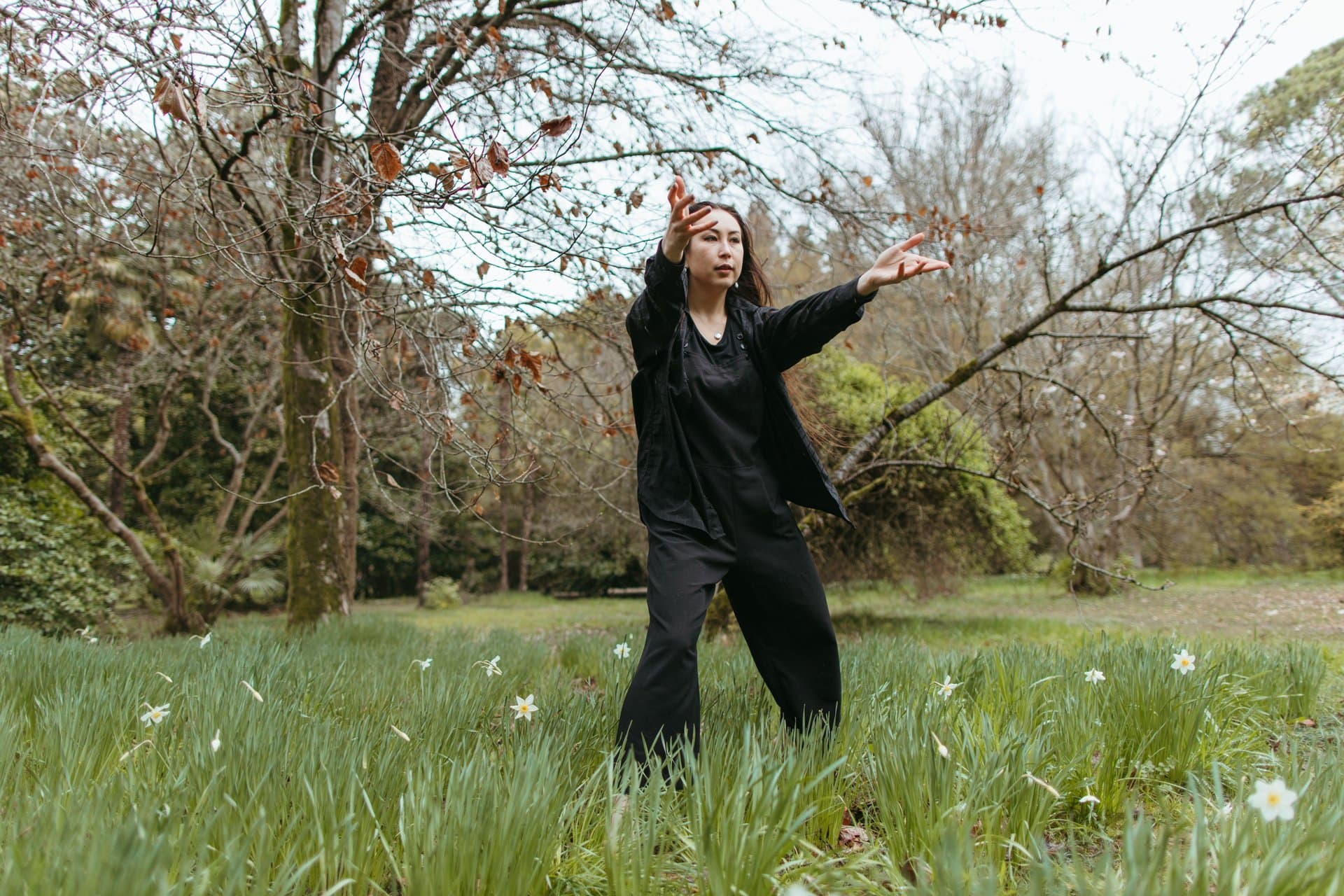
3. Gentle Cloud Hands
Cloud Hands is a flowing Tai Chi movement involving the arms, torso, and legs.
Begin standing comfortably.
As your weight shifts slowly to one side, allow one hand to move across the front of your body while the other hand moves in the opposite direction.
Then gradually shift your weight to the other side and allow the arms to reverse.
The movement should feel continuous and relaxed.
You do not need to copy a formal Tai Chi sequence perfectly.
Focus on:
Smooth movement
Relaxed shoulders
Soft knees
Natural breathing
Gentle rotation through the torso
This type of movement encourages coordination throughout the body and can help maintain mobility through the spine and shoulders.
4. Lifting and Lowering the Hands
Stand or sit comfortably.
Begin with your hands resting near the lower abdomen.
Slowly raise the hands upwards in front of the body while breathing in.
Then allow them to float slowly downwards as you breathe out.
Imagine that the arms are moving through water.
The shoulders remain relaxed.
The movement should be slow and effortless.
This simple exercise can be practised for several minutes.
It combines gentle movement with breathing and can be particularly useful as a calming practice at the beginning or end of the day.
If you'd like to start a gentle guided practice from home, we have a free course — Qigong for Lymphatic Drainage & Stress Relief.
How to Create a Simple Daily Practice
You do not need to practise Tai Chi for an hour to benefit from regular movement.
A simple routine might include:
Two minutes of relaxed breathing
Two minutes of opening and closing the chest
Three minutes of gentle weight shifting
Three minutes of flowing arm movements
Two minutes of quiet standing or seated relaxation
This creates a short practice of around ten to twelve minutes.
You can gradually increase the duration if it feels comfortable.
The most important factor is finding a routine that you can realistically repeat.
Supporting Fluid Balance During Menopause
Tai Chi is only one part of a broader approach to wellbeing.
Other everyday habits may also support healthy movement and general circulation.
Keep Moving Throughout the Day
Long periods of sitting can reduce the amount of muscle activity taking place throughout the body.
Short movement breaks can be helpful.
Try:
Walking around the house
Taking a short walk outdoors
Moving your ankles and feet
Stretching gently
Practising a few Tai Chi movements
Small amounts of movement can add up over the course of a day.
Stay Hydrated
It may seem counterintuitive, but drinking enough fluid is important for normal bodily function.
Water requirements vary between individuals.
Rather than trying to dramatically increase fluid intake, aim to drink regularly throughout the day and follow your healthcare professional's advice if you have a medical condition that affects fluid intake.
Prioritise Sleep and Relaxation
Menopause can have a significant impact on sleep.
Poor sleep can affect energy, mood, stress, and motivation to move.
Relaxation practices such as:
Slow breathing
Meditation
Gentle Tai Chi
Body awareness
Guided relaxation
may help create a calmer transition into rest.
They are not a treatment for every cause of poor sleep, but they can become useful parts of a regular evening routine.
Consider the Whole Body
The body does not function as a collection of separate systems.
Movement, sleep, stress, nutrition, and emotional wellbeing all influence how we feel.
This is why a holistic approach to menopause can be valuable.
Rather than focusing only on one symptom, consider the habits that support your overall wellbeing.
When Should You Seek Medical Advice?
Some mild puffiness can occur for many different reasons.
However, persistent, sudden, painful, or unexplained swelling should not simply be assumed to be a normal part of menopause.
Seek medical advice if you experience:
Sudden swelling
Significant swelling in one leg
Painful swelling
Redness or heat
Shortness of breath
Chest pain
Persistent or worsening fluid retention
A healthcare professional can help identify the underlying cause.
Tai Chi and other gentle movement practices can support general wellbeing, but they should not replace appropriate medical assessment or treatment.
Bringing It All Together
Tai Chi lymphatic drainage exercises are best understood as gentle, flowing movements that support regular physical activity, mobility, breathing, and relaxation.
Menopause can bring many changes to the body, and fluid retention or puffiness can sometimes be part of a broader experience of changing hormones and health.
However, there is no single Tai Chi movement that can “flush” fluid from the body or treat the underlying cause of swelling.
A more realistic approach is to use gentle movement consistently.
Move the joints.
Activate the muscles.
Breathe comfortably.
Take regular movement breaks.
Support your sleep and recovery.
Over time, these simple habits can help you feel more connected to your body and more confident in movement.
Tai Chi is not about forcing the body to change.
It is about learning to move with greater awareness, ease, and consistency.
If you would like to explore more gentle approaches to movement, relaxation, and healthy ageing, Wellness Academy offers foundational Qigong and Tai Chi practices alongside senior wellness resources designed to support everyday wellbeing.
Frequently Asked Questions
Can Tai Chi help with menopause fluid retention?
Tai Chi may support general movement, muscle activity, mobility, and relaxation, all of which can contribute to overall wellbeing. However, it has not been established as a specific treatment for menopause-related fluid retention. Persistent or unexplained swelling should be assessed by a healthcare professional.
What are the best Chinese movements for lymphatic drainage?
Gentle weight shifting, flowing arm movements, relaxed walking, and coordinated breathing are examples of movements found in traditional Chinese exercise practices that encourage whole-body activity. These should not be confused with clinically supervised lymphatic drainage treatment.
How often should I practise Tai Chi during menopause?
There is no single ideal frequency for everyone. A short, comfortable practice performed regularly may be more sustainable than occasional intense exercise. Starting with five to fifteen minutes and gradually building your practice can be a sensible approach for many people.