As we get older, balance can gradually become less reliable. You may notice that uneven ground feels less comfortable, getting up from a chair takes more effort, or you feel less confident when turning or changing direction.
Tai Chi for balance and fall prevention offers a gentle way to train these abilities. Rather than relying on fast or demanding exercise, Tai Chi uses slow weight shifting, controlled stepping, coordination and body awareness to help develop greater stability and confidence.
Balance is not just about standing still. It is about being able to control your body while you move.
Why Does Balance Decline With Age?
Balance depends on several systems working together.
Your eyes provide information about your surroundings, the inner ear helps detect movement and position, while muscles and joints provide information about where your body is in space. This internal sense is known as proprioception.
With age, changes in muscle mass, joint mobility, reaction speed, vision and proprioception can all affect balance.
Reduced activity can also play a role.
When we move less, we get fewer opportunities to practise the everyday movements that keep us stable.
Good balance means being able to:
Shift your weight confidently
Turn and change direction
Step over obstacles
Recover when you become unsteady
Move between sitting and standing
Control your ankles, knees and hips
These are practical skills that support independence.
Tai Chi for Balance and Fall Prevention
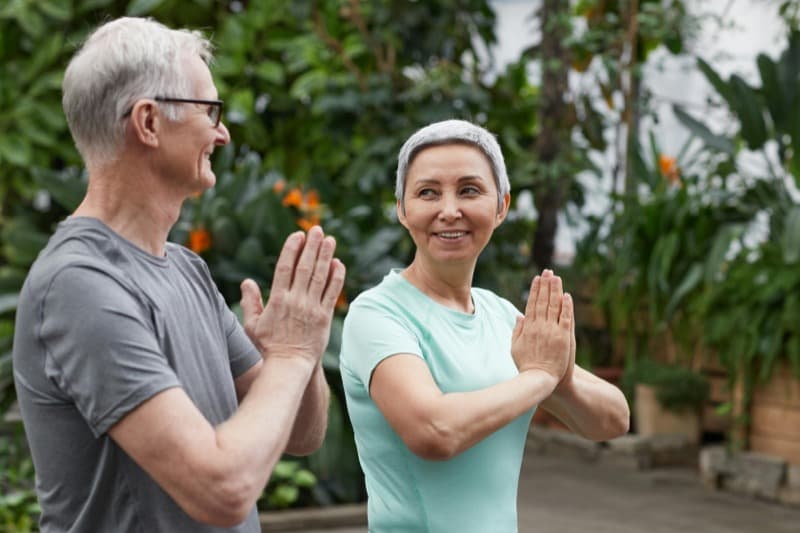
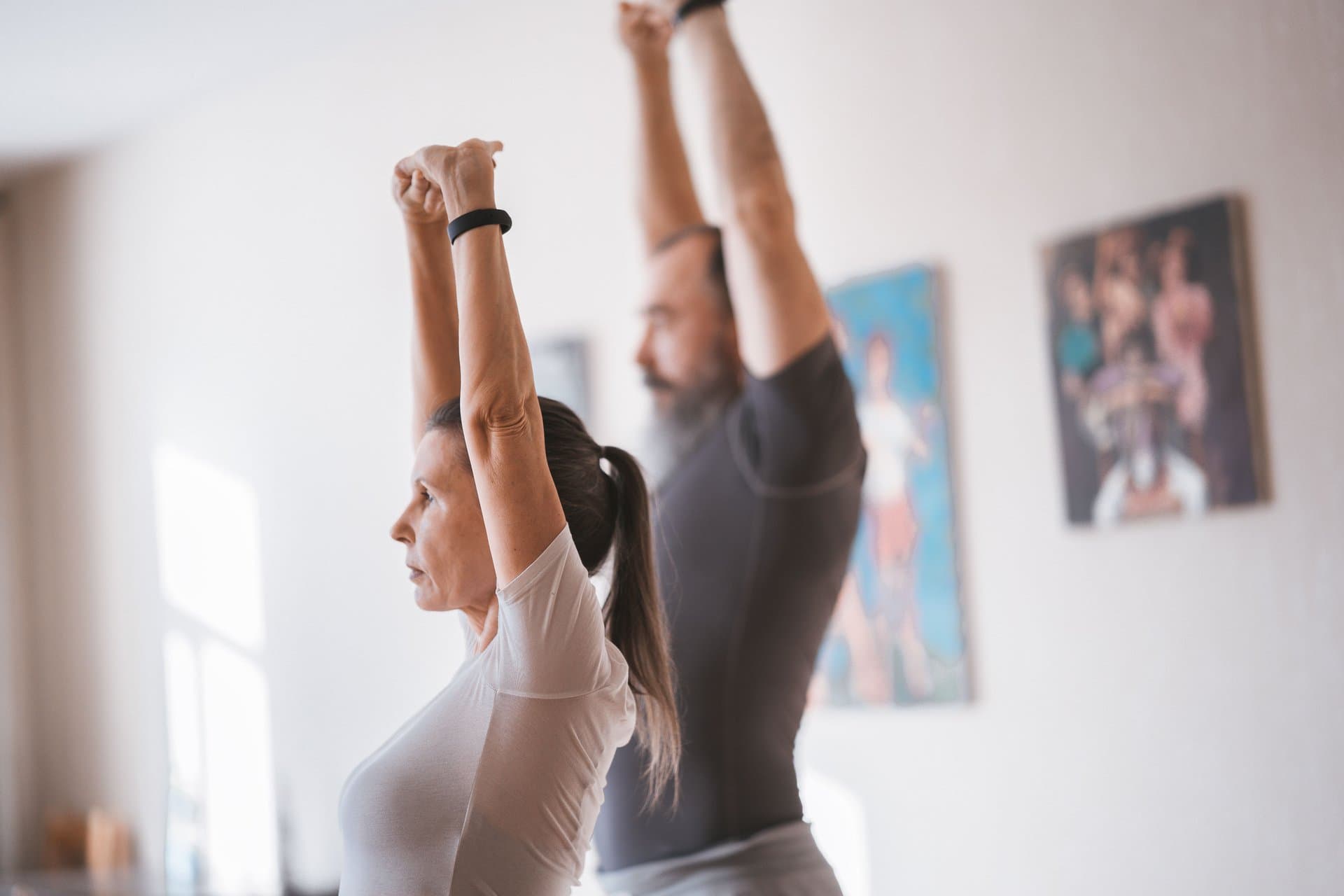
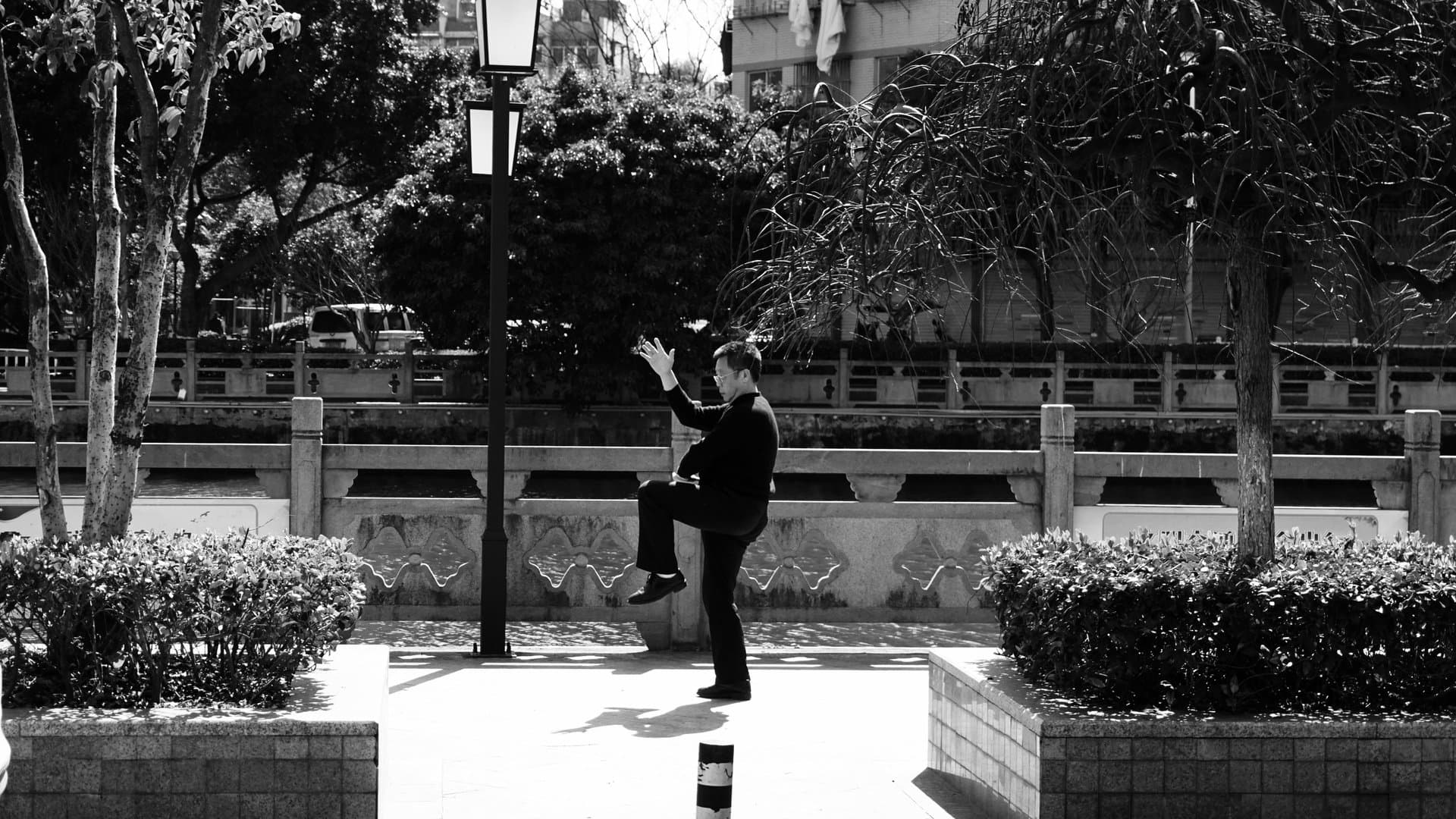
Tai Chi has been studied extensively as a form of exercise for older adults, particularly because it combines balance, coordination, lower-body control and mental attention.
Research has found that Tai Chi can improve balance and physical function, and clinical studies have also found reductions in falls among some older adults.
This is particularly interesting because Tai Chi does not require high-impact movements or intense cardiovascular exercise.
Instead, the practice repeatedly challenges your balance in a controlled environment.
You shift your weight from one leg to another.
You rotate.
You step.
You bend the knees.
You change direction.
All of these movements require the body to coordinate its position while maintaining stability.
Tai Chi should not be considered a guarantee against falling. Falls can have many causes, including medications, vision problems, environmental hazards and medical conditions.
But regular balance and strength training can be an important part of a broader approach to reducing fall risk.
The Tai Chi Principles That Build Stability
One of the most valuable aspects of Tai Chi is that balance is trained while moving.
Weight Shifting
Everyday movement involves constantly transferring weight between the legs.
Tai Chi slows this process down.
You learn to notice when your weight is moving, where it is going and how your body responds.
This can gradually improve control and awareness.
Rooting
Tai Chi often uses the concept of "rooting".
This means developing a stable connection between your feet and the ground without becoming rigid.
Rather than gripping the floor, imagine your feet becoming broad and grounded.
Keep your knees soft and allow your body to remain relaxed.
Moving From the Hips
The hips and trunk play an important role in balance.
Tai Chi encourages the upper and lower body to work together rather than treating them as separate parts.
Gentle rotation and weight shifting encourage coordination through the hips, legs and torso.
This is one reason Tai Chi can fit naturally into functional mobility routines for older adults.
4 Simple Tai Chi Balance Exercises
If you are new to Tai Chi, start near a sturdy chair, worktop or other stable surface that you can use for support if needed.
1. Side-to-Side Weight Shifting
Stand with your feet comfortably apart.
Slowly shift your weight towards your right leg, then gradually move back through the centre and towards your left.
Keep both feet connected to the floor.
Try not to lean your upper body excessively.
Repeat slowly for several rounds.
This is one of the simplest ways to begin practising controlled weight transfer.
2. Heel-to-Toe Weight Transfer
Place one foot slightly in front of the other.
Slowly move your weight towards the front foot, then gradually transfer it back towards the rear foot.
Keep the movement small.
This challenges your ability to remain stable while your centre of gravity changes and encourages awareness through the feet and ankles.
3. Gentle Knee Bends
Stand with your feet comfortably apart.
Slowly bend your knees a little, then return to standing.
There is no need to squat deeply.
Keep your knees aligned with your feet and maintain a relaxed posture.
This simple movement works the muscles of the legs while helping you practise maintaining stability as your body moves up and down.
4. Step and Return
Stand next to a stable support.
Slowly step one foot forward and gently transfer some of your weight onto it.
Then bring the foot back and return to your starting position.
Repeat on the other side.
Keep the steps small at first.
The goal is not to challenge your balance as much as possible. It is to practise controlled movement and gradually build confidence.
What About Chair-Based Tai Chi?
Not everyone feels comfortable practising standing balance exercises straight away.
Seated movement can be an excellent starting point.
Gentle chair exercises for seniors can help maintain movement through the ankles, knees, hips and upper body while reducing the risk associated with standing independently.
You can practise arm movements, gentle rotations, knee lifts and ankle circles from a stable chair.
As confidence improves, some people may gradually introduce supported standing exercises.
The most appropriate starting point is the one that allows you to move safely and consistently.
How Often Should You Practise?
You do not need a long Tai Chi session to begin improving your movement habits.
A short practice several times a week can be a good starting point.
As you become more comfortable, you can gradually increase the duration.
Try incorporating balance practice into everyday life rather than treating it as a separate task.
For example:
Practise weight shifting while waiting for the kettle
Do gentle knee bends before sitting down
Take a few controlled steps while holding a stable surface
Include Tai Chi movements in your morning routine
The goal is regular exposure to movement, not exhaustion.
Frequently Asked Questions
Is Tai Chi safe for older adults?
Tai Chi is generally considered a gentle form of exercise and can be adapted to different abilities. However, if you have significant balance problems, recent falls or a medical condition affecting your mobility, speak with a healthcare professional before beginning a new exercise programme.
Do I need to be fit to start Tai Chi?
No.
Tai Chi can be adapted for beginners and people with different levels of mobility. You can begin with small movements and gradually develop your coordination and confidence.
Can Tai Chi really reduce falls?
Research suggests that regular Tai Chi can reduce fall risk in some older adults, particularly when practised consistently. It is one part of a wider fall-prevention strategy that can also include strength training, appropriate footwear, vision checks and making the home environment safer.
What if I am afraid of falling while practising?
Start with support.
Practise next to a sturdy chair or worktop and keep the movements small. You do not need to stand on one leg or perform challenging movements to benefit from balance training.
Confidence tends to develop gradually as you become more familiar with movement.
Bringing It All Together
Balance is something we often take for granted until it begins to change.
The good news is that balance is not simply something we lose with age. It is a physical ability that can be practised and supported through regular movement.
Tai Chi combines weight shifting, leg control, coordination, posture and awareness in a gentle and sustainable way.
Tai Chi for balance and fall prevention is not about pushing yourself to the limit.
It is about teaching the body to move with greater control.
Start small.
Use support when you need it.
Practise regularly.
And focus on moving with confidence rather than perfection.
Over time, these simple habits can help you stay more mobile, capable and confident in everyday life.