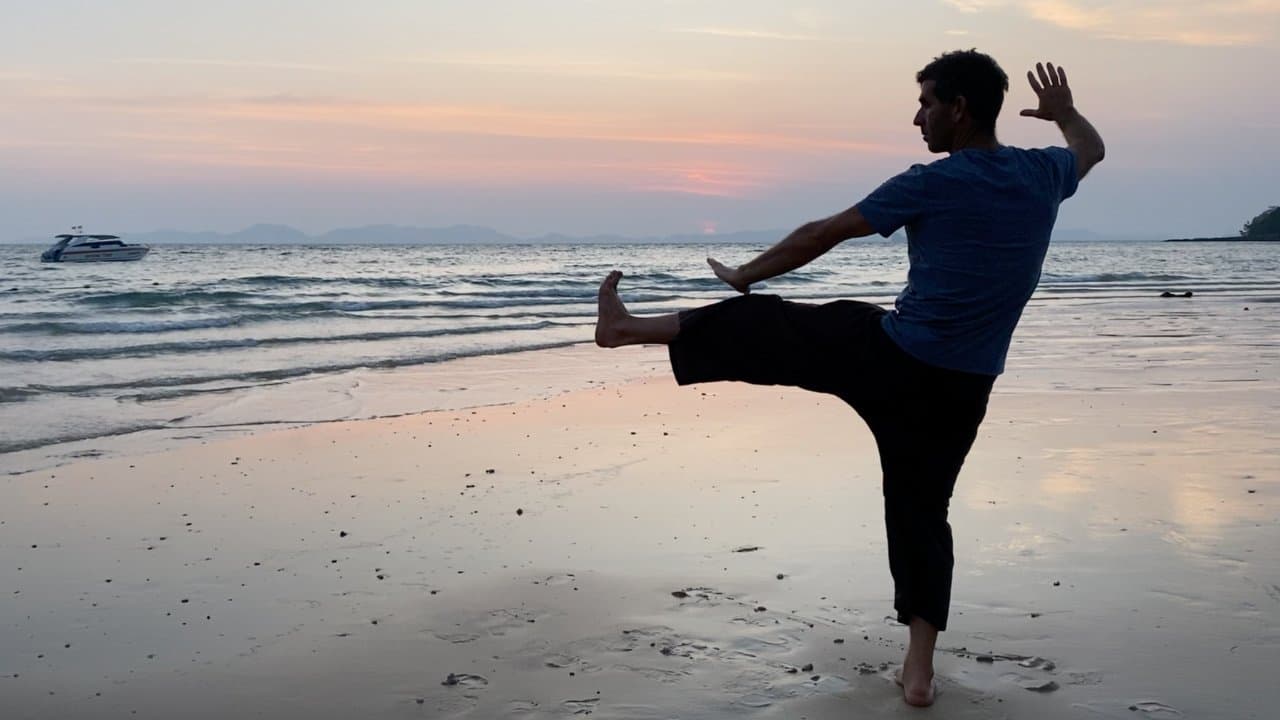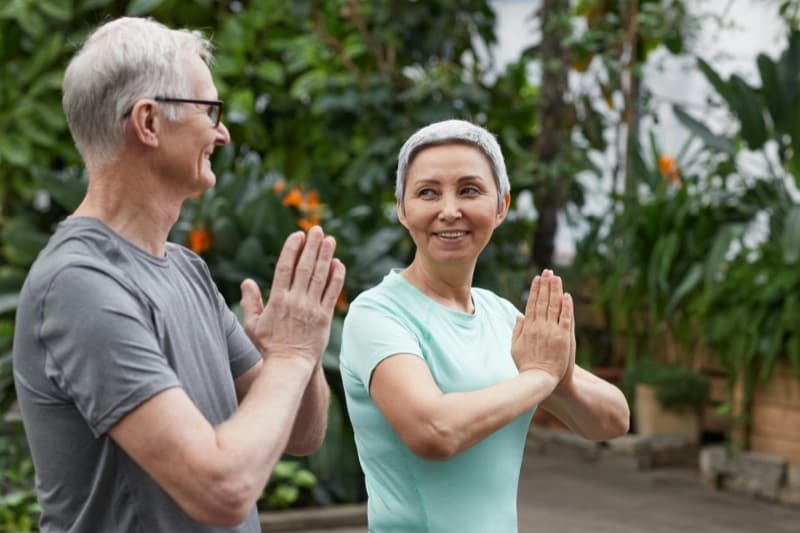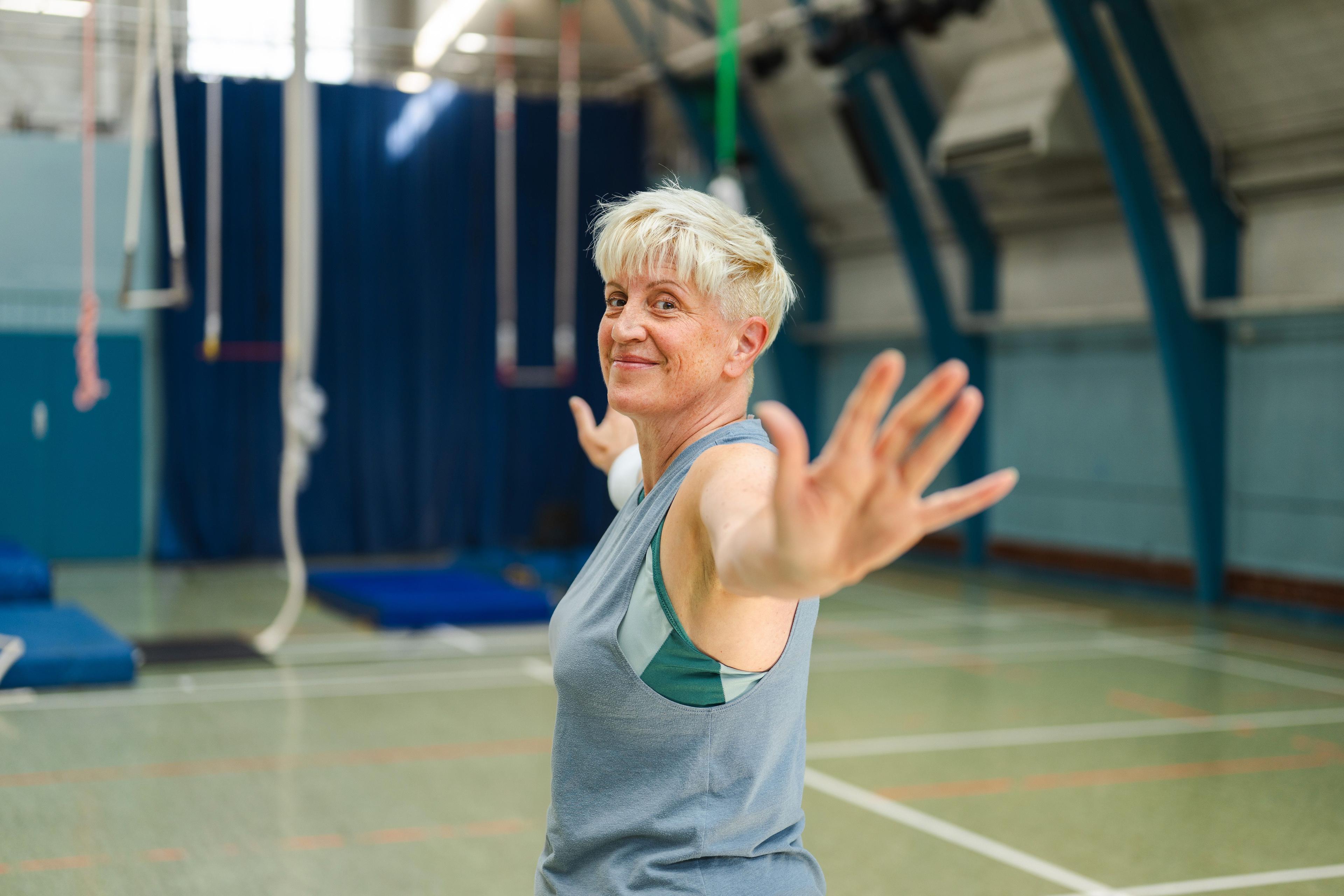
If you have COPD, you will almost certainly have been told that exercise is essential. And you will almost certainly have found, every time you try it, that it triggers exactly what you are trying to avoid. The breathlessness comes on faster than you expect. It escalates. Your chest tightens, your breathing becomes shallow and rapid, and the anxiety that accompanies it — the feeling that you cannot get enough air — makes everything worse. So you stop. The breathlessness retreats. And the next time you try, you are a little more deconditioned, a little more afraid, and the cycle tightens. This is the central paradox of COPD management: the medicine that might help most is the one that feels most dangerous. What very few people with COPD are told is that there is a form of movement that is designed entirely around the breath — not despite it, not after it, but beginning with it. That form is Qigong, and understanding why it works differently requires looking at what exercise actually triggers in a lung condition like this one.
Why Exercise Feels Like a Threat With COPD
Chronic obstructive pulmonary disease obstructs airflow in and out of the lungs, primarily on exhalation. During physical exertion, the demand for oxygen and the need to expel carbon dioxide both increase rapidly — but in COPD, the airways cannot respond quickly enough. Air becomes trapped in the lungs, a process called dynamic hyperinflation, which causes the chest to overinflate and the diaphragm to flatten into a mechanically disadvantaged position. The result is not just reduced breathing capacity; it is a sensation of suffocation that arrives quickly, often before any significant cardiovascular strain has occurred.
The breathlessness-panic spiralWhat makes COPD exercise avoidance particularly difficult to address is that the breathlessness is not simply a physical event. When airflow becomes restricted and the sensation of suffocation appears, the brain interprets this as a genuine emergency — which it has reason to do. The amygdala activates, adrenaline is released, the respiratory rate rises further, and shallow upper-chest breathing replaces the diaphragmatic breathing that was barely keeping up. This is not an overreaction; it is precisely what the nervous system is designed to do when oxygen is threatened. The problem is that it makes the breathlessness worse, not better, and it creates a powerful learned association: exertion equals danger. Over many repetitions, even modest activity begins to trigger anticipatory anxiety before any physiological breathlessness has occurred.
The deconditioning spiralWhen people reduce their activity — which is the natural consequence of this cycle — the respiratory muscles weaken, cardiovascular efficiency declines, and the threshold at which breathlessness is triggered drops still further. A 2017 analysis of COPD activity patterns found that even mild COPD is associated with substantial reductions in daily step count, and that this reduction predicts accelerated disease progression independently of lung function measurements. The exercise avoidance that feels protective is, in fact, one of the primary drivers of deterioration. Getting out of this trap requires not just a safer form of exercise but a different relationship with the breath itself.
What conventional exercise guidance missesStandard exercise recommendations for COPD — walking programmes, cycle ergometry, resistance training — address the physiological deconditioning but rarely address the psychological dimension: the panic, the learned fear, the anticipatory anxiety. They ask the person to push through breathlessness, to tolerate it, to build a higher threshold. For many people with moderate to severe COPD, this is not realistic. The breathlessness arrives too quickly, the anxiety escalates too fast, and the experience reinforces rather than reduces the fear. What is needed is not a higher tolerance for breathlessness but a different way of moving — one that changes the relationship between movement and breath so that the breath is no longer the obstacle.
What Makes Qigong Different
Qigong is a system of movement, breathing, and focused attention that has been practised in China for thousands of years. In recent decades, it has attracted serious clinical interest as a rehabilitative tool for respiratory and cardiovascular conditions, and the mechanisms through which it helps are now reasonably well understood.
Breath leads movement — not the other way aroundIn conventional exercise, movement generates a demand for increased breathing. You walk faster; your breathing must keep up. In Qigong, this relationship is inverted. The breath is established first — slow, diaphragmatic, emphasising the exhale — and the movement follows the rhythm the breath sets. If the breath is comfortable at a given pace, movement continues. If it is not, the movement slows or pauses until the breath is comfortable again. This is not a modification of Qigong for people with COPD — it is the fundamental structure of Qigong practice as originally conceived. The breath is the teacher; movement is its expression.
No aerobic thresholdQigong does not require the cardiovascular system to reach any minimum intensity to be effective. The practice works through the autonomic nervous system — specifically, through the stimulation of the parasympathetic branch via slow, controlled breathing — rather than through cardiovascular conditioning. This means there is no point at which the person must push beyond their comfort zone. The entire practice sits below the threshold at which dynamic hyperinflation and breathlessness-panic are likely to occur for most people with moderate COPD. This is not a lesser version of exercise; it is a practice that operates by a fundamentally different mechanism.
The exhalation focusPeople with COPD have particular difficulty with exhalation because the obstructed airways cannot clear air from the lungs quickly enough. This is why they tend to breathe with high respiratory rates and reduced tidal volume — short, shallow breaths that never fully empty the lungs. Qigong practice explicitly emphasises slow, complete exhalation, often through a slightly open mouth with relaxed lips, allowing the lungs to empty more fully before the next inhalation. Over time, this trains the person to tolerate a longer expiratory phase without anxiety, and to trust that the next breath will come. This directly counteracts the shallow breathing pattern that dynamic hyperinflation promotes.
Movement as a container for nervous system regulationBeyond the breathing mechanics, Qigong offers something that breathing exercises alone cannot: a structure of focused, intentional movement that occupies the mind during practice. Many people with COPD find that breathing exercises become anxiety-provoking in themselves — attention directed inward, towards the breath, amplifies awareness of restriction. The gentle, rhythmic movements of Qigong provide an external focus — the arc of an arm, the shift of weight, the slow rotation of the torso — that absorbs attention without demanding aerobic effort. The result is a practice in which breathing improves not by being analysed but by being accompanied by movement that is slower than the fear, calmer than the panic, and conducted entirely at the pace the breath allows.
What the Research Shows
The research base for Qigong and Tai Chi in COPD has grown substantially in recent years, and while the evidence is not yet at the level of large multicentre randomised controlled trials, the direction of findings is consistent and encouraging.
A 2021 qualitative study published on PubMed Central, which examined the experiences of people with COPD who had participated in a Tai Chi programme, found something that quantitative outcome measures typically miss: participants described a shift from fear to calm. Those who had entered the programme expecting breathlessness-induced panic found that the breath-led, slow nature of the practice replaced that fear with a sense of control and bodily safety. This psychological dimension — the replacement of anxiety with calm — is not incidental to COPD management; it is one of its most significant unmet needs. For those who want to understand the physiological mechanism underlying this shift, our post on Vagus Nerve Breathing: How Breathwork Activates Your Parasympathetic System explains how slow exhalation engages the vagus nerve and downregulates the stress response.
A 2024 study published via Healio examined the effects of a 12-week Tai Chi and Qigong programme on functional fitness and quality of life in older male patients with COPD. Participants showed improvements in functional fitness measures — a composite of balance, strength, and mobility — as well as self-reported quality of life. These are outcomes that matter considerably to people living with COPD, for whom the ability to manage daily tasks without triggering breathlessness is a central concern. The 12-week timeframe is also practically significant: it represents a realistic starting point, not a years-long commitment.
A 2025 meta-analysis of Tai Chi and Qigong for stable COPD, drawing on multiple randomised controlled trials, reported improvements in exercise capacity, dyspnoea severity, and quality of life across the included studies. The analysis was appropriately cautious about heterogeneity between studies and the need for larger trials, but the consistency of direction across varied populations and protocols strengthens the case for clinical relevance. The finding on dyspnoea — the subjective sense of breathlessness — is particularly important, since this is the symptom that most directly drives activity avoidance. For related reading on how these practices support lung function more broadly, see our post on Qigong for Lung Capacity: Breath, Posture and Vitality Flow.
It is important to be honest about the limits of this evidence. Most studies are relatively small, use different protocols, and measure different outcomes, making direct comparison difficult. The evidence is sufficient to say that Qigong and Tai Chi are safe and likely beneficial for people with stable COPD — but it does not yet meet the threshold for definitive clinical recommendations. What it does justify is a confident recommendation to try, particularly for those who have found conventional exercise approaches difficult or distressing.
If you'd like a guided practice that leads with breath — moving only as fast as your breathing allows, with no aerobic demand — we have a free course — Qigong: The Taoist Path to Optimal Health.
How to Practise Safely With COPD
Practising Qigong with COPD requires some specific considerations that are different from those for healthy older adults. The following guidance reflects the consensus from the research literature and from clinical experience with this population.
Medication timingIf you have been prescribed a short-acting bronchodilator (such as a salbutamol inhaler), use it 15 to 20 minutes before you begin your practice. Bronchodilators open the airways and increase the reserve available before breathlessness is triggered, making the initial minutes of practice considerably more comfortable. Do not use your bronchodilator as a signal that you can push harder — the purpose is to make a gentle practice safer and more comfortable, not to enable higher intensity. If you use long-acting bronchodilators or inhaled steroids, continue these on your normal schedule; they will provide background bronchodilation throughout your practice.
Intensity signals — the talk testThe most reliable way to monitor your intensity during Qigong with COPD is the talk test: you should be able to speak in short sentences throughout. If you cannot, you are working too hard and need to slow down, simplify the movement, or rest. This is a lower threshold than the standard exercise talk test, which typically permits some breathlessness. With COPD, the goal is to remain well below the point where dynamic hyperinflation begins — which means keeping intensity sufficiently low that the breath never becomes urgent or distressing. If you use an oximeter, keeping your oxygen saturation above 90% throughout is a reasonable additional safeguard.
When to stopStop the practice and sit down if any of the following occur: breathlessness that feels out of control or escalating rather than stable; a sensation of chest tightness or chest pain; oxygen saturation dropping below 88% if you are monitoring it; lightheadedness; or cyanosis (blueness around the lips). Mild awareness of your breathing throughout practice is normal and does not indicate a problem. The distinction to notice is between breathlessness that remains manageable and stable and breathlessness that is escalating. The former is compatible with continuing at reduced pace or pausing briefly; the latter requires stopping and resting, and potentially using your rescue inhaler if prescribed.
Working alongside pulmonary rehab, not instead of itIf you have been referred to a pulmonary rehabilitation programme or are waiting for one, Qigong is an adjunct to that programme, not a replacement. Pulmonary rehab is an evidence-based intervention that addresses exercise capacity, breathing technique, and self-management skills in a supervised environment. Qigong addresses something different — the nervous system regulation, the breath-movement relationship, the psychological dimension of living with COPD — and the two work well together. If your pulmonary rehab team is unfamiliar with Qigong, it is worth mentioning the 2024 Healio study and the 2025 meta-analysis. Most respiratory physiotherapists will recognise the rationale immediately.
A Gentle Qigong Practice for COPD
The following practice is designed around the specific requirements of COPD management: all movements are either seated or performed standing with chair support, the emphasis throughout is on slow, complete exhalation, and every movement follows the breath rather than generating a demand for increased breathing. Have a sturdy chair in front of you throughout. Practise in a warm, well-ventilated room if possible — cold air can trigger airway narrowing in some people with COPD.
Seated abdominal breathing (5 minutes). Sit comfortably with your feet flat on the floor and your spine upright but not rigid. Place one hand on your abdomen, below the navel. Breathe in gently through the nose, allowing the belly to rise — not the chest. Then exhale slowly through slightly pursed lips, as though you were blowing out a candle from a metre away. Allow the exhalation to be twice as long as the inhalation: count to three on the inhale, count to six on the exhale. Do not force the air out — let gravity and the natural recoil of the lungs do the work, guided by a gentle inward movement of the belly. This is the foundation of everything that follows. If you feel any breathlessness during the practice, return here immediately. The extended exhale is the most effective tool you have for resetting the breathing cycle and preventing the escalation into panic.
Seated shoulder rolls with breath (3 minutes). Remaining seated, inhale as you slowly roll both shoulders up and back, allowing the chest to open and the sternum to lift slightly. Exhale through pursed lips as the shoulders complete the backward arc and descend. Pause at the bottom of the exhale — a natural pause, not forced — before beginning the next inhale. The movement should feel like it is being drawn by the breath rather than moving independently of it. This exercise gently expands the rib cage on the inhale, creating more space for the lungs, and coordinates upper body movement with the exhalation phase that COPD makes most difficult.
Seated arm float (5 minutes). Sitting with your hands resting on your thighs, inhale slowly and allow both arms to float upward from the sides, rising to shoulder height by the top of the inhale. Then exhale through pursed lips and let the arms descend slowly back to the thighs, arriving at rest as the exhalation completes. The arms are not being raised by muscular effort — they are floating on the breath. This is a central Qigong principle: movement as the visible expression of breath, not a separate physical demand. Keep the pace entirely governed by the breathing: if the arms arrive back before the exhale is complete, slow the descent. If the breath completes before the arms have risen fully, slow the inhale. The breath is always the authority.
Standing gentle sway (3 minutes — with chair support). Stand behind your chair, holding the back lightly for support. Feet are shoulder-width apart, knees soft. Inhale as you shift your weight very gently to the right, then exhale through pursed lips as you shift back to centre and continue to the left. The movement is small — a few centimetres each way — and entirely unhurried. This gentle weight-shifting improves balance without any cardiovascular demand, and the slow rhythm it establishes deepens the exhalation practice by giving it a physical cadence to follow. If standing feels effortful today, return to the seated practice and do the arm float instead.
Closing seated stillness (3 minutes). Return to your seat. Rest both hands on your thighs and close your eyes gently. Return to the pursed-lip exhalation breathing — in through the nose, out through slightly parted lips, with a long, unhurried exhale. Notice the gentle rise and fall of the abdomen. Notice the pause at the end of each exhale before the next inhale arrives. You are not trying to do anything except breathe slowly and allow the breath to do what it was always meant to do. If thoughts arise about the breathlessness, or about the COPD, let them pass. The breath is already slower than it was five minutes ago. This closing stillness is not incidental — it allows the nervous system to consolidate the parasympathetic shift that slow breathing produces, and to carry some of that calm into the rest of the day.
If breathlessness rises during any part of this practice, stop the movement immediately and sit down if standing. Return to pursed-lip breathing — slow exhale, twice the length of the inhale. Do not try to accelerate recovery. The breath will settle. If it does not settle within two to three minutes, use your rescue inhaler if prescribed. Keep a note of what triggered the breathlessness so you can adjust the practice next time — perhaps a shorter duration, a slower pace, or fewer standing movements.
Frequently Asked Questions
Is it safe if I am on oxygen?
For most people who use supplemental oxygen with COPD, gentle Qigong is safe and can be practised while wearing an oxygen cannula. The movements are of sufficiently low intensity that they do not typically require increased flow rates, though this varies between individuals. The key principle is to continue oxygen as prescribed throughout the practice — do not remove it to practise Qigong. If you are on ambulatory oxygen and have been prescribed a specific flow rate for light activity, use that rate during the practice rather than your resting rate. If you are unsure what rate to use, ask your respiratory nurse or physiotherapist before beginning. Many people who use oxygen find that the slow, diaphragmatic breathing practised in Qigong reduces their breathlessness below what it would be during equivalent rest without practice, suggesting that the nervous system regulation may partly offset the physiological limitation.
Can I do this during a flare?
During an acute exacerbation of COPD — characterised by increased breathlessness beyond your normal baseline, increased sputum, change in sputum colour, or fever — the recommendation is rest, not practice. Your body's resources during an exacerbation are directed towards managing an inflammatory process, and adding any physical demand, however gentle, is unlikely to be helpful and may worsen breathlessness. The exception is the breathing element alone: pursed-lip breathing and slow abdominal breathing can be useful during a flare as a way of managing breathlessness and anxiety, and these are unlikely to cause harm. Wait until you have returned to your pre-exacerbation baseline — typically five to seven days after completing any antibiotic or steroid course — before resuming the full movement practice.
How is this different from the breathing exercises my physiotherapist gave me?
Physiotherapist-prescribed breathing exercises for COPD typically address specific mechanical problems: clearing secretions (active cycle of breathing technique), managing breathlessness during activity (paced breathing), or improving respiratory muscle strength. These are valuable and should be continued. Qigong addresses something different — the relationship between movement and breath, and the nervous system regulation that underlies the psychological dimension of COPD. Rather than training the breathing system in isolation, Qigong trains it in the context of whole-body movement, which is the context in which breathlessness actually occurs in daily life. The two approaches are complementary, not competing. If you have specific techniques your physiotherapist has taught you — such as positions of ease or the recovery position for breathlessness — incorporate these into your Qigong practice when needed; they are entirely compatible.
Will it improve my FEV1?
FEV1 — forced expiratory volume in one second, the standard measure of airflow obstruction in COPD — is determined by the structural changes in the airways and lung tissue that characterise the condition. Qigong is unlikely to improve FEV1 meaningfully, and the research does not claim that it does. What Qigong does improve, and what the research consistently reports, is functional exercise capacity, dyspnoea severity, and quality of life — the outcomes that actually determine how limiting COPD feels day to day. Breathing better does not require breathing more freely in the spirometric sense; it requires learning to use the lung capacity you have more efficiently, with less panic and less hyperventilation. This is precisely what Qigong training produces, and it is clinically valuable independently of any change in FEV1.