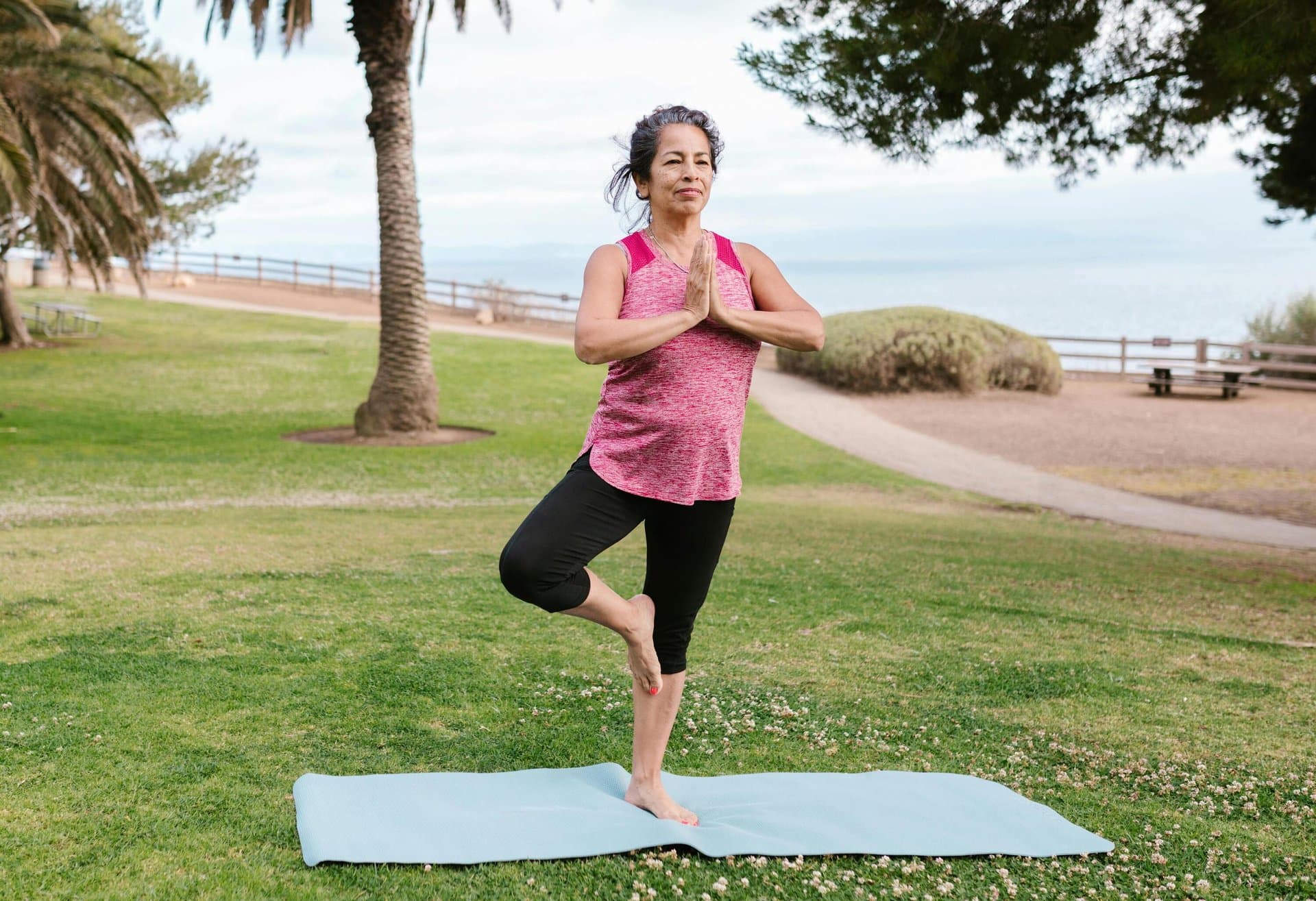
If you have atrial fibrillation and your doctor has told you to exercise more, you will likely recognise the difficulty. Every time your heart rate rises — climbing stairs, carrying shopping, walking briskly — there is the fear that you are about to trigger an episode. So you slow down. You do less. You avoid exertion wherever possible. This response feels entirely rational, and in the moments it protects you from anxiety, it probably is. But avoiding movement is one of the most effective ways to make AFib worse over time. The cardiovascular deconditioning it produces reduces heart rate variability, increases sympathetic nervous system tone, and makes the conditions that sustain atrial fibrillation more entrenched. There is a way out of this cycle — but it requires a different kind of movement than most people associate with exercise.
Why AFib Makes Exercise Feel Dangerous (And Why Avoiding It Makes Things Worse)
Atrial fibrillation involves the upper chambers of the heart firing chaotic electrical signals rather than contracting in coordinated rhythm. During an episode, the heart beats irregularly and often faster than normal. For most people, this produces palpitations, breathlessness, fatigue, and sometimes chest tightness — all sensations that naturally associate themselves, over time, with physical effort.
The result is a kind of learned caution. The body begins to treat exertion not as exercise but as a potential threat. Heart rate increases that would go unnoticed in a healthy person become alarming signals. The ordinary breathlessness of a brisk walk starts to feel indistinguishable from the onset of an episode. Even when no episode occurs, the anxiety around it is real and disabling.
The deconditioning trapWhen people with AFib reduce their activity — which most do, often significantly — the cardiovascular system begins to decondition in ways that directly worsen the condition. Resting heart rate tends to rise. The autonomic nervous system, which regulates the balance between the sympathetic (fight-or-flight) and parasympathetic (rest-and-digest) branches, shifts towards sympathetic dominance. This matters because sympathetic overactivation is one of the recognised triggers for AFib episodes. Paradoxically, the avoidance behaviour adopted to prevent episodes creates the very physiological conditions that make them more likely.
What low-intensity movement actually doesNot all exercise carries the same risk profile for AFib patients. High-intensity aerobic exercise — running, vigorous cycling, competitive sport — produces rapid and unpredictable surges in heart rate that can indeed precipitate episodes in some people. But low-to-moderate intensity movement, particularly movement that actively engages slow breathing, has the opposite effect. It shifts the autonomic balance towards parasympathetic dominance, reduces the resting heart rate over time, and improves heart rate variability — a measure of the heart's ability to respond flexibly to changing demands, which is consistently lower in people with AFib than in those without it.
The psychological dimensionAnxiety and AFib are closely linked — not just practically but physiologically. Psychological stress elevates catecholamines (stress hormones) that increase heart rate and reduce vagal tone, both of which are independent triggers for AFib. The movement-avoidance cycle often increases anxiety over time by reducing a person's sense of physical competence and bodily safety. Any form of exercise that is both physically gentle and cognitively calming therefore addresses two separate but reinforcing mechanisms simultaneously.
What Qigong and Tai Chi Actually Do to Heart Rhythm
Qigong and Tai Chi operate through several mechanisms that are directly relevant to atrial fibrillation. They are not simply slow exercise — they are practices in which the breathing, movement, and mental focus are coordinated in ways that have measurable effects on the autonomic nervous system.
Vagal activation through controlled breathingThe slow, diaphragmatic breathing that characterises Qigong practice directly stimulates the vagus nerve — the main conduit of the parasympathetic nervous system, which runs from the brainstem through the heart. Vagal stimulation increases what is called vagal tone: the degree of parasympathetic influence over the heart's natural pacemaker. Higher vagal tone is associated with more stable, flexible heart rhythm and reduced risk of arrhythmia. For more on how breathing affects vagal tone, see our post on Vagus Nerve Breathing: How Breathwork Activates Your Parasympathetic System.
Heart rate variability and autonomic balanceHeart rate variability (HRV) — the slight beat-to-beat variation in the interval between heartbeats — is one of the most useful measures of cardiovascular autonomic health. Low HRV is a marker of sympathetic dominance and reduced parasympathetic capacity, and is consistently associated with AFib burden and adverse outcomes. Practices that increase HRV — including slow breathing, mindfulness, and gentle rhythmic movement — therefore support the autonomic balance that AFib disrupts. Qigong addresses all three simultaneously.
Reduced sympathetic activationStudies of Qigong and Tai Chi practice consistently find reductions in circulating cortisol, noradrenaline, and other markers of sympathetic activation. The focused, meditative quality of the practice — attention directed inward, movement performed without urgency or effort — appears to downregulate the stress response in ways that more vigorous exercise does not. For AFib patients, in whom sympathetic overactivation is both a trigger and a consequence of the condition, this effect is clinically meaningful.
What the Research Shows
The evidence base for Qigong and Tai Chi in cardiovascular conditions has grown considerably in recent years, and the findings are more encouraging than many people expect.
A 2024 meta-analysis published through Arizona State University and Elsevier, examining the effects of Qigong and Tai Chi on heart rate variability across multiple randomised controlled trials, found a large effect size for HRV improvement — a standardised mean difference of 0.83. This is a substantial effect in clinical terms, comparable to or exceeding what has been reported for many pharmacological interventions targeting autonomic function. The analysis included both healthy older adults and those with cardiovascular conditions, and the effects were consistent across both groups.
Specifically for AFib, the Liverpool Centre for Cardiovascular Science is currently running a clinical trial recruiting AFib patients to evaluate the effects of structured Tai Chi practice on arrhythmia burden, quality of life, and autonomic function. Results are pending, but the fact that a specialist cardiovascular centre is investing research resources in this area reflects how seriously the therapeutic potential is now being taken within cardiology.
It is worth being honest about the limits of the current evidence. Most existing studies are relatively small, have short follow-up periods, and assess surrogate outcomes (such as HRV) rather than hard endpoints such as hospitalisation or stroke risk. The 2024 meta-analysis is encouraging, but larger, longer-term trials are needed. What the evidence does support is that Qigong and Tai Chi improve HRV and autonomic balance in ways that are plausible mechanisms for AFib benefit — and that they do so safely and without the risks associated with higher-intensity exercise.
For related reading on how these practices support the nervous system more broadly, see our post on Qigong for Sleep: Why Older Adults Wake at 3am and What Actually Helps.
If you'd like to try the breathwork and gentle morning movement — specifically designed to calm the nervous system and support heart rhythm — we have a free course — Morning Energy Flow.
How to Practise Safely With AFib
Practising Qigong with AFib requires some specific considerations that do not apply to healthy older adults. The following guidance is not a substitute for advice from your cardiologist — but it reflects the consensus from both research literature and clinical experience with this population.
Medication timing and heart rate awarenessMany AFib patients take rate-controlling medications (such as beta-blockers or digoxin) that limit how high the heart rate can rise during exertion. These medications are not a reason to avoid practice — they are, in fact, partly what makes gentle movement safer. Practise at a time of day when your medication is reliably at its peak effect, typically one to two hours after your morning dose. Keep intensity low enough that you can breathe comfortably through the nose throughout. If you use a heart rate monitor, aim to remain below 60% of your maximum heart rate. If you do not, the breathing test is reliable: if you are panting or cannot speak easily, you are working too hard for AFib-safe Qigong.
Intensity guidelines specific to AFibThe movements described in this post are intentionally low in metabolic demand — they are breathing-led, slow, and involve no sudden changes in heart rate. This is not simply a matter of caution; it reflects the specific mechanism through which Qigong helps AFib. The benefit comes not from cardiovascular conditioning (which requires a minimum exercise intensity) but from autonomic modulation, which is achieved at much lower intensities. Keeping the practice slow is not a compromise — it is the point.
Signs to stop and what to doStop practising and sit down if you experience any of the following: a sudden, significant increase in palpitations; chest pain or pressure; breathlessness disproportionate to the level of exertion; lightheadedness or near-faintness; or a feeling that your heart rhythm has changed abruptly. Mild awareness of your heartbeat during practice is normal and not concerning. If symptoms do not resolve within a few minutes of rest, or if you have any doubt, seek medical advice. Keep a note of what you were doing when symptoms occurred so you can discuss it with your cardiologist.
Working with your cardiologistBefore beginning any new exercise programme with AFib, it is worth having a brief conversation with your cardiologist or GP. The majority will support low-intensity Qigong practice — it is far safer from a cardiovascular perspective than the inactivity most AFib patients default to. What you are asking for is not permission to do something risky; you are asking for confirmation that your current rate control is adequate and that there are no additional contraindications specific to your case (such as uncontrolled heart failure or recent cardioversion). With that confirmation, you can practise with considerably more confidence and significantly less anxiety.
A Gentle Morning Practice
The following practice is designed around the specific requirements of AFib management: breathing-led, slow, non-aerobic, and focused on producing parasympathetic activation rather than cardiovascular conditioning. Have a chair within reach throughout. Practise in a warm room if possible, as cold increases sympathetic tone.
Abdominal breathing (5 minutes). Sit comfortably or stand with feet shoulder-width apart. Place one hand on your abdomen and breathe slowly through the nose, allowing the belly to rise on the inhale and fall on the exhale. Lengthen the exhale gradually — aim for an exhale roughly twice the length of the inhale. This is the core of the practice. Everything else builds on the autonomic shift this breathing initiates. If you feel palpitations at any point during the session, return here — slow, long exhales are the fastest way to restore vagal tone during a moment of cardiac awareness.
Shoulder rolls and upper body release (3 minutes). From the breathing position, slowly roll both shoulders back and down in large, unhurried circles. Then forward. The purpose is not to warm the muscles — it is to release the habitual upper-body tension that accompanies anxiety and that itself elevates sympathetic activation. Move with the breath: exhale as the shoulders complete the backward roll, inhale as they begin the next circle. Keep the jaw soft throughout.
Cloud hands variation (5 minutes). Stand with feet shoulder-width apart and knees very slightly soft. Raise both arms slowly to chest height, as though cradling a large ball. Shift your weight slowly from right foot to left as one hand rises and the other descends, following the motion of a slow, horizontal figure-of-eight. The movement should feel like you are moving through water. Breathe through the nose throughout. If you feel unsteady, reduce the weight shift and keep both feet fully in contact with the floor.
Kidney patting (3 minutes). Stand comfortably and allow your arms to swing gently from side to side as your torso rotates — a movement so slow and passive that it requires almost no effort. As each arm swings behind you, it lightly pats the lower back in the region of the kidneys. In Qigong tradition, this area is considered a reservoir of vital energy; from an anatomical perspective, the gentle self-massage stimulates circulation and releases paraspinal tension. Keep the movement completely unhurried. This is one of the safest and most calming Qigong movements for cardiovascular conditions.
Closing standing meditation (3 minutes). Return to quiet standing with feet shoulder-width apart and arms resting at your sides or held lightly in front of the abdomen. Return to slow abdominal breathing. Close the eyes if that feels comfortable. Notice the sensations in your body without trying to change them. Allow the heart rate to settle fully before moving on with your day. This closing is not incidental — it allows the parasympathetic shift initiated during the practice to consolidate rather than being interrupted by the return to ordinary activity.
If you notice palpitations during any movement in this practice, stop the movement, sit down, and return to slow abdominal breathing with extended exhales. In most cases, the palpitations will settle within one to two minutes. If they do not, or if they are accompanied by other symptoms, follow the guidance in the safety section above.
Frequently Asked Questions
Is it safe to practise Qigong during an AFib episode?
During an active episode — when your heart is in an irregular or rapid rhythm — the recommendation is rest, not movement. Attempting to continue exercise during an episode is unlikely to convert the rhythm and may increase discomfort. Gentle abdominal breathing with extended exhales can be useful during an episode, as it stimulates vagal tone and may help the rhythm settle more quickly, but this is breathing practice, not movement. Wait until the episode has resolved and your heart rate has returned to its normal resting level before resuming the full practice.
Can regular Qigong practice reduce how often AFib episodes happen?
This is the question the Liverpool Centre for Cardiovascular Science trial is designed to answer properly, so a definitive response must wait for those results. What the existing evidence strongly suggests is that Qigong improves the autonomic conditions that modulate AFib — specifically, it increases vagal tone and heart rate variability, and reduces sympathetic overactivation. These are known mechanisms through which AFib is maintained and triggered. Whether this translates to measurable reductions in episode frequency in a clinical trial remains to be confirmed, but the physiological rationale is sound and the preliminary data are encouraging.
What if I am on blood thinners — is Qigong still safe?
Yes. Anticoagulants (such as warfarin, apixaban, or rivaroxaban) are prescribed to reduce stroke risk in AFib and have no interaction with gentle movement of the kind described here. The main consideration for people on blood thinners is fall prevention — a reason to keep the intensity low and to practise near a chair or wall if balance is uncertain. The movements in this post involve no dynamic balance challenges, no rapid changes in position, and no risk of sudden falls. If your INR (for warfarin patients) is unstable, speak to your GP, but this is a reason to be monitored carefully, not a reason to avoid gentle Qigong.
Is Qigong appropriate if I have a pacemaker?
For most people with pacemakers, gentle Qigong is entirely appropriate and is often actively encouraged by cardiac rehabilitation teams. The movements involved are well within the heart rate ranges at which pacemakers are set to intervene, and there is no electromagnetic or mechanical interaction between Qigong practice and pacemaker function. The same general principles apply: keep intensity low, monitor for symptoms, and confirm with your cardiologist that your device settings are suitable for light exercise. Many people find that the reduced anxiety and improved autonomic balance from regular practice makes managing life with a pacemaker considerably easier.