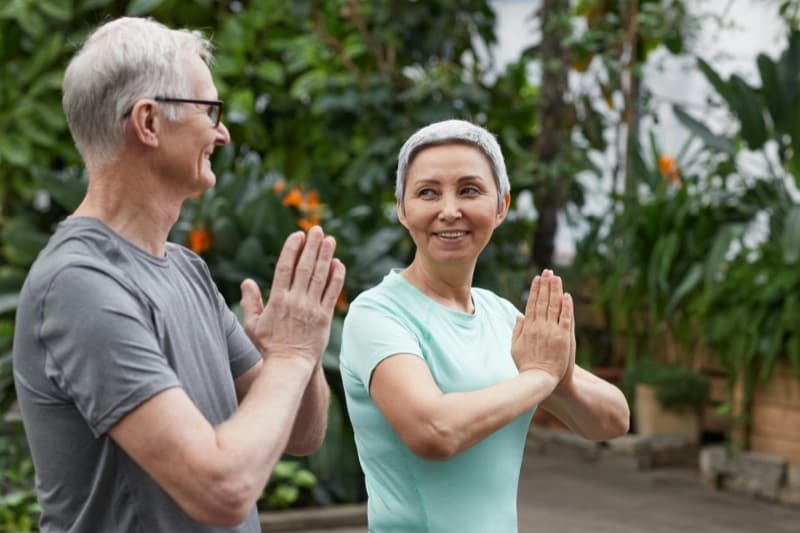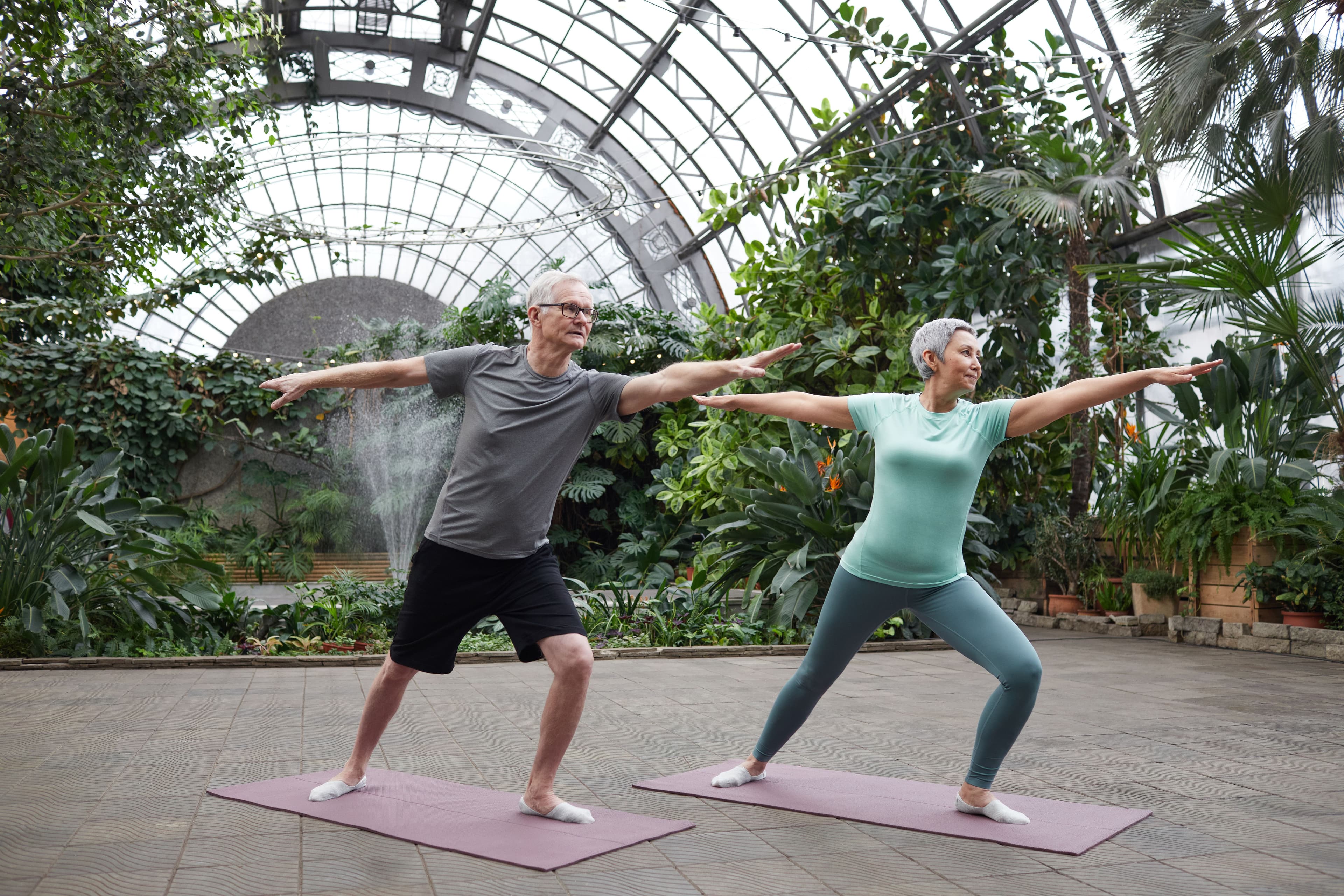
Zhan Zhuang — pronounced jan jwang and translated as "standing like a tree" or "standing post" — is one of the oldest and most foundational practices in Chinese movement medicine. Unlike the flowing sequences of Tai Chi or Qigong, Zhan Zhuang asks you to do something deceptively simple: stand still.
That stillness, it turns out, is anything but passive. Practised consistently, standing meditation builds deep structural strength, trains the nervous system, and develops a quality of relaxed alertness that is difficult to find in conventional exercise. It is gaining quiet attention in longevity and healthy ageing circles — and for good reason.
What Is Zhan Zhuang?
Zhan Zhuang is a standing meditation practice rooted in Traditional Chinese Medicine and internal martial arts, particularly Xingyi and Yi Quan. The practitioner stands in one of several postures — most commonly with arms held slightly forward as if embracing a large tree — and simply holds the position while remaining as relaxed as possible.
On the surface it sounds easy. In practice, most beginners find it surprisingly demanding within two or three minutes. The challenge is not muscular effort but the difficulty of staying genuinely relaxed under sustained load — something our nervous systems rarely experience in modern life.
The practice trains what Chinese medicine calls yi (intention) and qi (vital energy), but from a purely physical standpoint it develops postural endurance, proprioception, and the deep stabilising muscles of the hips, spine and legs that conventional gym training often misses.
Why It Matters for Healthy Ageing
Balance and stability are among the most important physical capacities to preserve as we get older. Research consistently shows that fall risk increases with age, and that training proprioception — the body's ability to sense its own position in space — meaningfully reduces that risk.
Zhan Zhuang trains proprioception continuously throughout each session. Standing still on two feet with relaxed, slightly bent knees requires constant micro-adjustments from the nervous system. Over time, the body becomes more responsive and self-correcting — which is exactly what good balance depends on.
A large longitudinal study published in 2026 found that maintaining optimal vascular and physical health between the ages of 45 and 65 was associated with nearly 13 additional dementia-free years. The underlying factors — circulation, physical activity, neurological health — are all supported by regular movement practices like Zhan Zhuang.
If you are drawn to explore the broader Taoist tradition that Zhan Zhuang comes from — movement, breathwork, and meditation woven together into a complete system — our Qigong: The Taoist Path to Optimal Health course deepens exactly what this practice begins.
The Core Postures for Beginners
There are many Zhan Zhuang postures, but beginners need only two to start building a meaningful practice.
Wuji — The Natural Standing Posture
Stand with your feet shoulder-width apart and your toes pointing forward or very slightly outward.
Allow your knees to soften — not deeply bent, just unlocked.
Let your arms hang naturally by your sides.
Tuck the chin very slightly so the back of the neck feels long.
Close your eyes or soften your gaze toward the floor a few metres ahead.
Breathe normally through your nose. Do not try to control the breath.
This is the starting posture. It looks like nothing. It is everything. Begin here and hold for two to three minutes.
Cheng Bao — Embracing the Tree
From Wuji, raise your arms slowly as if wrapping them around a large barrel or tree trunk. Your hands come to roughly chest height, palms facing inward, fingers spread and relaxed.
Your elbows drop slightly lower than your wrists. Your shoulders stay down and away from your ears.
The shape should feel like a gentle hug — no tension in the arms, no gripping.
Hold this posture for two to five minutes to begin with. This is the posture most people associate with Zhan Zhuang.
The challenge is to remain relaxed in the arms and shoulders while the legs quietly work. Most beginners discover they are holding far more tension than they realised — particularly in the jaw, the neck and the hands.
What You Will Actually Feel
In the first week or two, most beginners experience one or more of the following:
Mild shaking or trembling in the thighs — this is normal and indicates the deep stabilising muscles are being activated, often for the first time.
Warmth spreading through the legs and lower body — a sign of improved circulation.
An urge to fidget, adjust or stop — this is the mind's resistance to sustained stillness, not physical discomfort.
A feeling of heaviness followed by lightness — many practitioners describe this as the moment the body stops fighting the posture and begins to settle into it.
None of these sensations are problems to be solved. They are the practice.
If you'd like to go deeper into the Taoist system that Zhan Zhuang comes from — movement, breathwork, and meditation woven together — we have a full course — Qigong: The Taoist Path to Optimal Health.
A Simple Beginner Routine
The following is enough to begin and to begin feeling the benefits within two to three weeks of consistent practice.
Start with two minutes in Wuji. Simply stand and breathe. Notice where you are holding tension and see if you can let it go without changing your posture.
Move into Cheng Bao and hold for three minutes. If your arms ache, that is fine. If they shake, that is fine. The only thing to avoid is raising your shoulders — if they creep upward, lower them gently and continue.
Return to Wuji for one minute to close. Let the arms drop, breathe naturally, and stand quietly before moving on with your day.
That is six minutes. It is enough. As the weeks pass you will naturally want to extend the Cheng Bao hold — five minutes, then eight, then ten. Let that happen organically rather than forcing it.
Practise daily if possible, ideally in the morning before the day's demands take over. Outdoors is traditional, but anywhere you can stand undisturbed works well.
How Zhan Zhuang Connects to Tai Chi and Qigong
Zhan Zhuang is often described as the root from which Tai Chi and Qigong grow. The qualities it develops — rooted stability, relaxed alertness, awareness of internal sensation — are exactly the qualities that make flowing movement practices feel alive rather than mechanical.
Many Tai Chi practitioners return to standing practice regularly to reset their foundation, particularly if they notice their forms becoming rushed or tense.
If you are new to these practices and want a guided entry point, our Qigong: The Taoist Path to Optimal Health course provides a strong foundation that pairs naturally with a standing practice.
For those specifically interested in how these practices support balance and independence as we age, the Senior Wellness Program offers a comprehensive approach to holistic health for the over 50s.
Frequently Asked Questions
How long should I stand for as a beginner?
Start with five to six minutes total — two minutes in Wuji and three in Cheng Bao. This is enough to feel the practice without overdoing it. Build gradually over several weeks.
Is Zhan Zhuang safe for older adults?
Yes, with appropriate modifications. The key is not to bend the knees deeply. A very slight softening of the knees is sufficient. Anyone with knee pain, significant joint issues or balance concerns should consult a healthcare professional before starting and may benefit from practising near a wall for support initially.
Why do my legs shake?
Shaking in the thighs and legs is very common and completely normal. It indicates that the deep postural muscles — which are rarely used in everyday sedentary life — are being activated and challenged. The shaking tends to reduce over several weeks of regular practice as those muscles strengthen and coordinate.
Can I practise Zhan Zhuang if I already do Tai Chi or Qigong?
Yes — and many practitioners find that adding even five minutes of standing practice before their usual session improves the quality of their movement work significantly. The stillness creates a kind of internal listening that carries forward into the flowing forms.
Bringing It All Together
Zhan Zhuang is a practice that rewards consistency far more than intensity. Five minutes every morning will do more over six months than an occasional thirty-minute session.
Start with the two postures above. Stand quietly. Notice what you feel. Return tomorrow and notice again. The tree does not hurry — and neither does this practice.