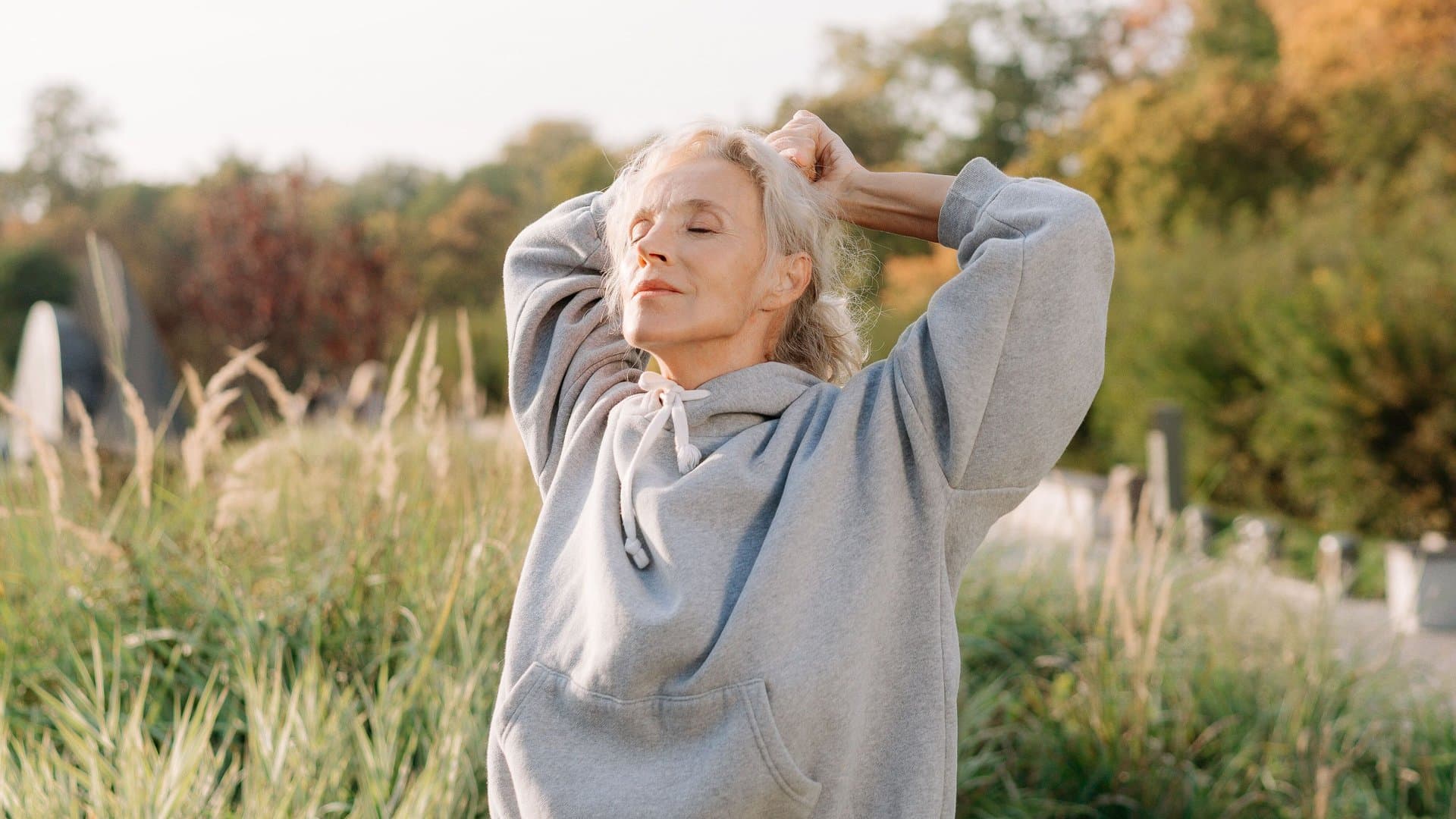
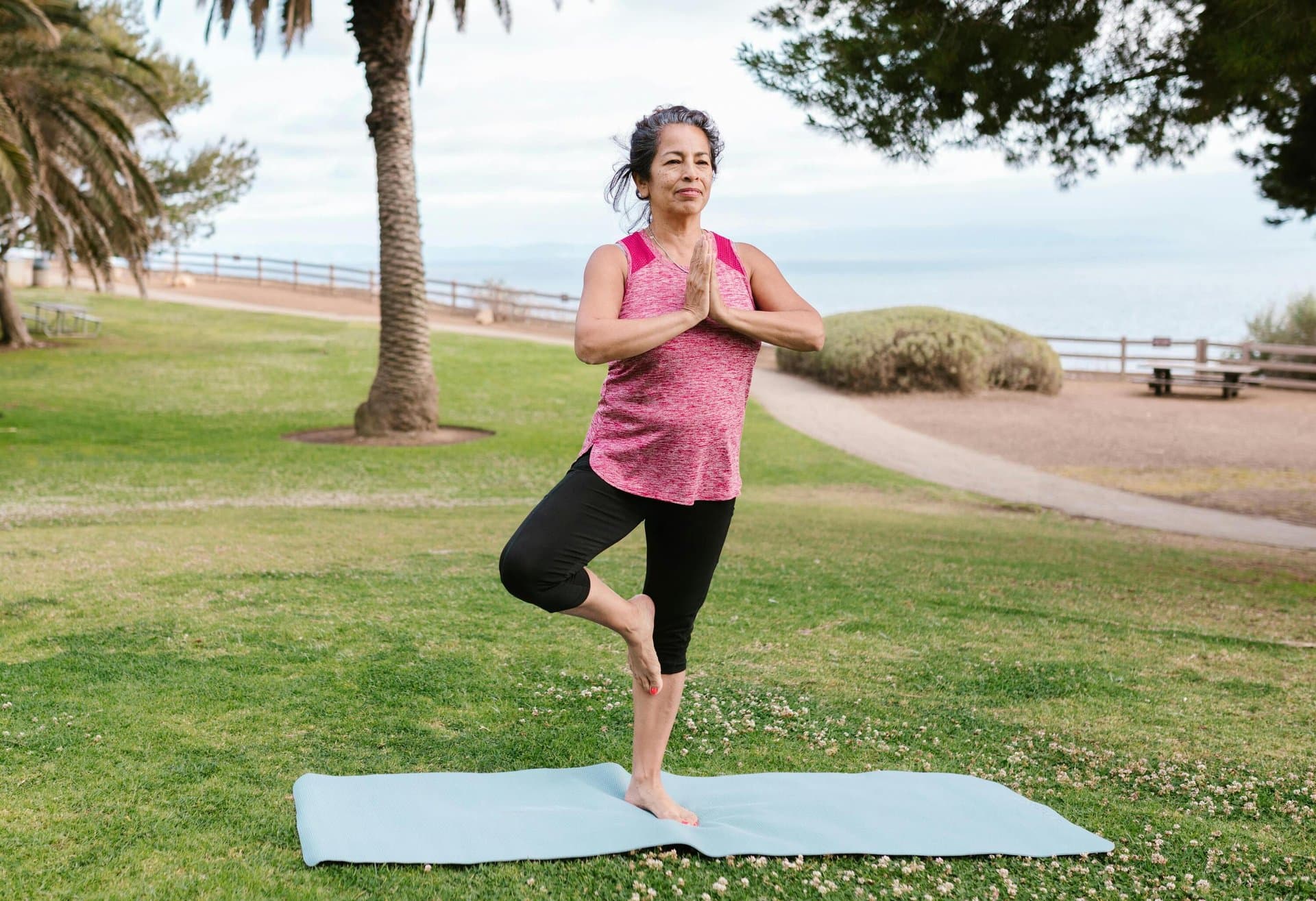
The vagus nerve is a major part of the parasympathetic nervous system, which helps regulate functions such as heart rate, digestion and breathing.
It is important, however, not to think of the vagus nerve as a simple switch that can be "reset".
Gentle breathing and movement can influence autonomic regulation, but there is no need to force or manipulate the body.
Fascia also plays an important role in movement and sensory feedback. Areas such as the neck, diaphragm and pelvis are involved in breathing, posture and movement, so tension in these regions can contribute to a feeling of restriction.
Slow movement can help you become more aware of these sensations while gradually encouraging greater ease.
A 10-Minute Restorative Flow
You can practise these vagus nerve reset exercises seated or standing. Choose whichever feels safest and most comfortable.
1. Arrive and Breathe - 2 Minutes
Sit comfortably or stand with your feet supported.
Place one hand over your abdomen and allow your breathing to become slower without forcing it.
Notice the movement of your ribs and belly.
Try allowing the exhalation to become slightly longer than the inhalation.
The aim is not to take huge breaths. Gentle, comfortable breathing is enough.
If you would like to explore this approach more deeply, the free Qigong for Lymphatic Drainage & Stress Relief course provides guided practices combining gentle movement, breathing and relaxation.
2. Gentle Neck and Shoulder Release - 2 Minutes
Slowly roll your shoulders backwards and forwards.
Then allow your head to turn gently from side to side.
Avoid pulling or stretching the neck.
Instead, imagine creating space around the base of the skull, jaw and shoulders.
Keep breathing naturally.
These small movements can help reduce the tendency to hold tension around the upper body.
3. Undulating Spine Movement - 2 Minutes
With your knees soft, gently shift your weight forwards and backwards.
Allow the movement to travel through the pelvis, spine and shoulders.
You are not trying to create a large movement.
Think of the body as gently rippling.
This type of continuous movement is characteristic of many Chinese movement practices, where relaxation and coordinated breathing are combined with physical motion.
4. Gentle Abdominal and Rib Movement - 2 Minutes
Place your hands around the lower ribs.
As you inhale, allow the ribs to expand naturally.
As you exhale, allow them to soften.
You can add a very gentle side-to-side rotation.
This encourages movement around the torso without forcing the abdomen or diaphragm.
These principles overlap with what people sometimes search for as Chinese lymphatic drainage exercises, although it is more accurate to describe them as gentle movements that support normal circulation and fluid movement rather than a special detox technique.
5. Finish With Stillness - 2 Minutes
Return to a comfortable standing or seated position.
Let your hands rest over your abdomen or chest.
Notice your breathing.
Notice your feet.
Notice whether any part of your body feels different from when you started.
There is nothing else you need to achieve.
Simply allow yourself a few moments of quiet awareness.
Can Qigong Support Lymphatic Flow?
The lymphatic system relies partly on muscle movement and changes in pressure created by breathing.
This means regular physical activity, walking and gentle movement can all contribute to normal lymph circulation.
Tai Chi lymphatic drainage is therefore best understood as a way of using slow, rhythmic movement to support the body's natural processes, rather than as a medical treatment or detox.
Qigong works in a similar way.
The emphasis on relaxed, continuous movement encourages you to move without unnecessary muscular tension.
This can make it particularly appealing for people who find vigorous exercise uncomfortable.
Frequently Asked Questions
What should I feel during the practice?
You may notice warmth, gentle tingling, easier breathing or a feeling of relaxation. You may also feel very little at first.
There is no particular sensation you need to achieve.
Can emotional feelings arise during gentle movement?
Sometimes.
Slowing down can make you more aware of thoughts, emotions and physical sensations that were previously overlooked.
If emotions arise, allow them to be present without forcing yourself to analyse them. If you feel overwhelmed, stop and return to normal breathing.
When is the best time to practise?
There is no single ideal time.
Morning practice can help you begin the day with greater body awareness, while an evening session can provide a gentle transition towards rest.
The best time is the one you can practise consistently.
Bringing It All Together
Effective vagus nerve reset exercises do not need to be complicated.
Gentle breathing, relaxed movement and greater awareness can provide a simple way to step out of constant tension and reconnect with the body.
The goal is not to force a "reset".
It is to create a little more space for the nervous system to regulate naturally, one breath and one movement at a time.