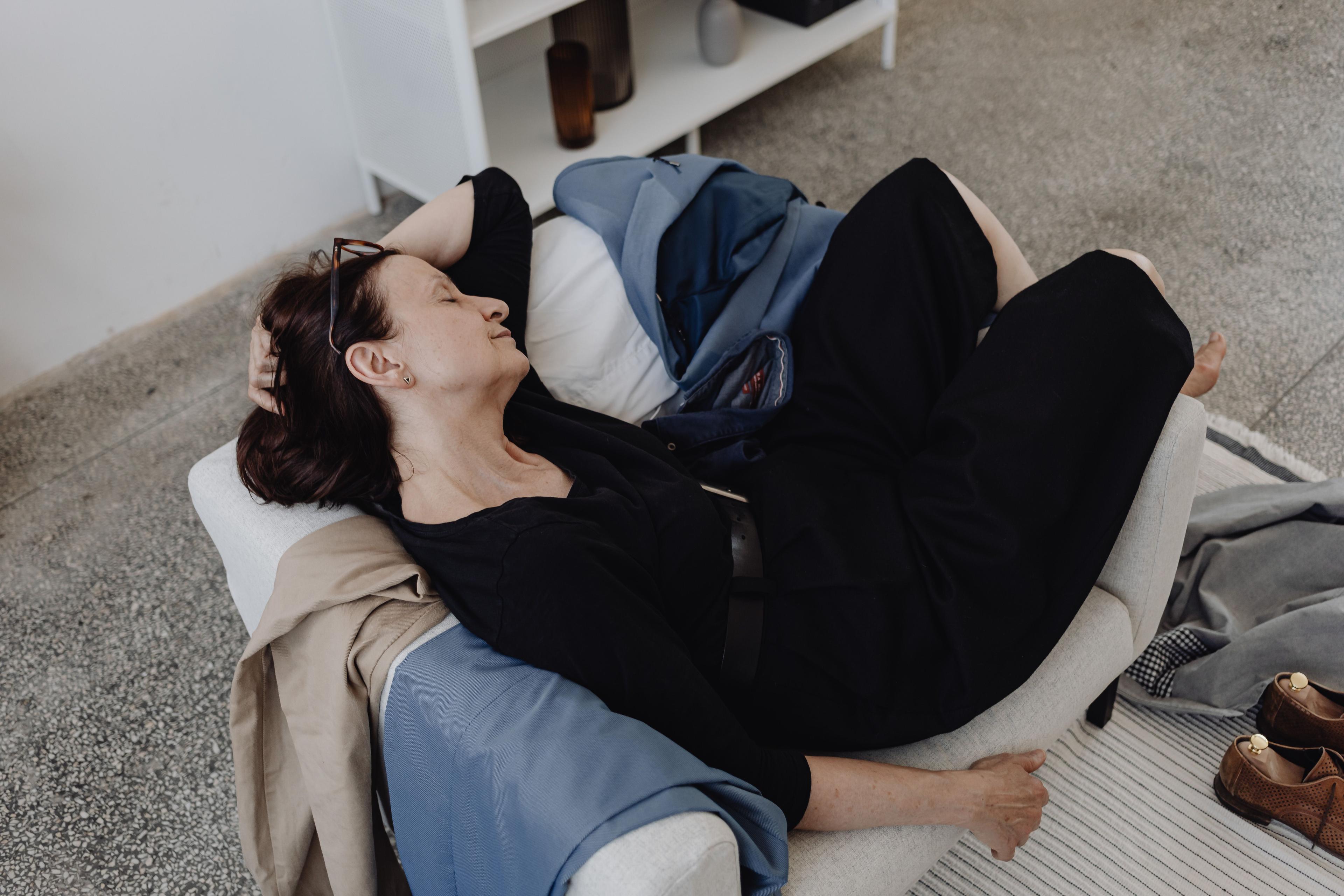
You tried a short walk. Nothing strenuous — fifteen minutes around the block, the kind of thing everyone says is fine. The next day you could not get off the sofa. Not tired, exactly. Something heavier than tired: a bone-deep depletion, a fogginess that made reading impossible, a body that felt like it had been replaced with something that did not belong to you. If you have Long COVID, this experience has a name: post-exertional malaise. And it means that the standard advice — start gently, build gradually, push through — is not just unhelpful. For many people, it actively makes things worse.
This is not a character failing. It is a physiological reality. And understanding it is the starting point for finding movement that actually helps.
Why Exercise Makes Long COVID Worse
Post-exertional malaise (PEM) is a symptom in which physical or cognitive exertion triggers a significant worsening of symptoms, typically occurring 12 to 72 hours after the activity. It is not ordinary fatigue. It is a systemic crash — affecting energy, cognition, pain, sleep, and mood simultaneously — that can persist for days or weeks after what most people would consider mild activity.
PEM is now understood to be one of the defining features of Long COVID for a significant proportion of sufferers. Research suggests that 74% of Long COVID patients with PEM deteriorate with traditional graded exercise programmes — the standard NHS approach to rehabilitation. The conventional wisdom that the body simply needs to be gradually reconditioned does not apply when the fundamental problem is not deconditioning but a disrupted cellular energy system, autonomic dysfunction, or ongoing immune activation.
What is actually going wrongThe mechanisms behind PEM in Long COVID are still being researched, but several pathways have emerged. One is mitochondrial dysfunction: the cellular machinery that produces ATP — the body's energy currency — appears to be impaired in many Long COVID patients, meaning that even modest exertion exceeds the body's ability to generate and replenish energy. Another is dysautonomia: the autonomic nervous system, which regulates heart rate, blood pressure, and blood flow in response to activity, fails to respond normally. Heart rate spikes unpredictably. Blood flow to exercising muscles may be insufficient. The body's response to physical demand becomes erratic and effortful in ways that have nothing to do with fitness level.
A third pathway involves the immune system: in some Long COVID patients, exertion appears to trigger a renewed inflammatory response, with elevated inflammatory markers detectable in the blood after exercise in a way not seen in healthy individuals. This is why the crash arrives 24 to 72 hours later rather than immediately — it is not cardiovascular; it is immunological.
The graded exercise problemGraded exercise therapy (GET) was developed for populations where the primary barrier to activity is deconditioning and fear-avoidance — genuine physical deconditioning that improves with graduated challenge. For Long COVID patients with PEM, this model is biologically incorrect. It assumes that the body will adapt upward with consistent challenge. When the cellular energy system or the immune response is the problem, that assumption does not hold. Pushing through produces not adaptation but crash. The 74% deterioration rate in PEM patients on GET programmes is the clinical evidence of this mismatch.
What Pacing Actually Means — and Why Most People Get It Wrong
Pacing is the alternative: working consistently within your current energy envelope rather than pushing past it. The concept is simple. The practice is not.
The energy envelope is not fixed. It fluctuates with sleep quality, infection, stress, the weather, the demands of the previous day. Many people with Long COVID describe boom-and-bust cycles: a better day arrives, they do more than usual, and they pay for it in the days that follow. Pacing requires resisting the urge to capitalise on good days and treating the envelope as a ceiling rather than a floor.
Heart rate as a pacing toolFor people with PEM, keeping the heart rate below the anaerobic threshold — typically estimated at 60% of maximum heart rate, or roughly 220 minus your age multiplied by 0.6 — is a practical guide to staying within the aerobic energy system where the mitochondrial demands are most manageable. Many Long COVID patients find that even modest activity pushes them above this threshold unpredictably. A slow walk that should be well within range triggers a heart rate spike that signals the system is overloaded before any sensation of effort arrives.
This is where Qigong is structurally different from almost every other form of movement.
What the Research Shows
The evidence for Qigong specifically in Long COVID is early but encouraging. A 2026 randomised controlled trial found improvements in fatigue, cognitive function, and sleep quality after a 16-week Tai Chi programme in young adults with persistent post-COVID symptoms. The improvements were significant across multiple outcome measures. Critically, the trial used a slow, breath-paced format — not progressive cardiovascular loading — and adverse events were minimal.
The broader evidence base for Qigong in fatigue conditions is more established. Studies in ME/CFS — a condition whose overlap with Long COVID is now well-recognised — consistently show that Qigong can reduce fatigue severity without triggering post-exertional worsening, provided the practice is kept within the patient's current capacity. A 2020 meta-analysis of 24 randomised controlled trials found that Qigong produces significant reductions in cortisol and improvements in heart rate variability — evidence of autonomic nervous system benefit that is directly relevant to the dysautonomia component of Long COVID.
The research on Qigong and cortisol is particularly important here. Conventional aerobic exercise is a cortisol-raising stressor. For a system already dysregulated — where the autonomic response to exertion is erratic and potentially inflammatory — adding cortisol load is counterproductive. Qigong produces measurable cortisol reductions. It shifts the autonomic nervous system toward parasympathetic dominance. It does the physiological opposite of what conventional exercise does to the stress hormone milieu. This is not incidental to its relevance for Long COVID: it is central to it.
If you'd like a guided place to start, our free Morning Energy Flow course is designed around gentle, breath-led movement that works within your current energy limits — no cardiovascular demand, no pushing through.
Why Qigong Fits Inside the Energy Envelope
Qigong has several structural features that make it uniquely suited to movement within an energy envelope.
The breath sets the paceIn Qigong, movement follows the breath — not the other way around. If the breath becomes uncomfortable or effortful at a given pace, the movement slows or pauses until the breath is comfortable again. This built-in pacing mechanism means that Qigong naturally adjusts to your current capacity on any given day. There is no minimum intensity, no target heart rate to reach, no sense that less is failure. What you can do today is what the practice asks of you today.
No aerobic thresholdQigong operates below the aerobic threshold for the vast majority of people. The movements are gentle, the pace is slow, and the cardiovascular demand is minimal. Heart rate stays well within the range that most Long COVID patients can sustain without triggering PEM. This is not a modified or adapted version of Qigong — it is Qigong as it was always practised.
Seated practice is complete practiceQigong can be practised entirely seated or even lying down. This is not a compromise or a lesser version — it is a fully valid form of practice, appropriate for days when standing is too demanding. Seated Qigong delivers the same breathwork, the same gentle joint movement, and the same autonomic nervous system benefit as the standing form. Having a seated option that carries no sense of inadequacy removes one of the main barriers that Long COVID sufferers encounter with exercise guidance.
Cognitive load is minimalMany Long COVID patients experience cognitive impairment — difficulty concentrating, memory lapses, word-finding problems. High-cognitive-demand activities can trigger PEM just as physical exertion can. Qigong's simple, repetitive movements and focused but gentle attention do not place significant cognitive demands on the practitioner. The practice can be followed even on difficult brain-fog days, which is when accessible movement is most needed.
A Gentle Practice for Long COVID
Begin with 5 minutes. Not 15, not 10 — 5. The goal in the first weeks is not to build fitness. It is to establish that movement is possible without triggering a crash. That is a different objective entirely, and it requires a different relationship with what counts as enough.
Monitor your heart rate if you can. Keep it below 60% of your estimated maximum. If it rises above that during any movement, stop and rest until it returns before continuing.
Seated abdominal breathing (3 minutes). Sit comfortably in a chair with your feet flat on the floor. Place one hand on your belly. Breathe in slowly through the nose for a count of 3, allowing the belly to rise into your hand. Breathe out slowly through the mouth for a count of 5 — longer than the inhale. This extended exhale activates the parasympathetic nervous system and stabilises the autonomic response. On days when even this feels effortful, lie down and do the same. This alone — 3 minutes of slow abdominal breathing — is a complete and valid practice on bad days. Do not underestimate it.
Seated shoulder rolls (2 minutes). Remaining seated, begin slow, full shoulder circles — forward for one minute, then backward. Keep the movement large and unhurried, coordinating with the breath: inhale as the shoulders rise, exhale as they descend. This gentle mobilisation improves circulation without cardiovascular demand, releases the habitual tension that fatigue encourages in the neck and shoulders, and maintains range of motion without loading any joint.
Seated wrist and hand circles (2 minutes). Extend both arms in front of you, hands loose. Circle the wrists slowly — large, smooth circles, as large as feels comfortable. Reverse direction after one minute. This movement stimulates the distal circulation, reduces the tendency to hold tension through the hands and forearms, and is accessible on even the most limited days. If raising the arms to full extension feels too effortful, rest the elbows on the thighs and circle the wrists from there.
After these 7 minutes, rest. Notice what you feel — not what you have failed to do, but what you have done. If you feel well within your limits, that is correct. If you feel even slightly depleted, that is feedback: reduce to 5 minutes next time. The practice expands as your envelope expands — not by being pushed, but by being consistently and carefully filled.
Practical Notes
Track your baseline before and after. Keep a simple daily log: energy on waking (1–10), brain clarity (1–10), and any symptom changes 24 and 48 hours after each practice session. If a session consistently triggers worsening within 48 hours, it is too much — reduce duration or intensity. The 48-hour window matters because PEM often arrives the day after the day after, not immediately.
Rest is not failure. On days when the energy envelope is very small, the seated breathing alone is the practice. There will be days when even that is too much. Resting on those days is not giving up — it is pacing. The practice resumes when the envelope allows.
Work with your healthcare team. Let your GP or Long COVID clinic know you are beginning a gentle movement practice. Some NHS services now have physiotherapists who specialise in Long COVID rehabilitation and are familiar with the pacing approach. If you have been referred to Long COVID services, the approach described here is compatible with pacing-based rehabilitation and can complement it.
This is not a cure. Qigong will not resolve the underlying mechanisms of Long COVID. What it offers is safe, sustainable movement within the energy envelope — movement that does not trigger crashes, that supports autonomic function, and that keeps the body mobile and the nervous system regulated during a recovery that may take months or longer. That is a meaningful thing. It is not everything, but it is real.
How do I know if I am doing too much?
The 48-hour rule: if your symptoms — fatigue, brain fog, pain, sleep disruption — are noticeably worse 24 to 48 hours after a practice session, you have exceeded your current envelope. The response should be to reduce the duration of the next session by half, not to push through hoping the response will not recur. Post-exertional malaise does not build tolerance with repetition; it signals that the system has been asked for more than it currently has. Respect that signal every time it appears. As recovery progresses, the envelope will expand and you will naturally be able to do more — but that expansion should come from the body, not from willpower.
Can I do this during a flare?
During a significant symptom flare — when fatigue, pain, or cognitive symptoms are substantially worse than your baseline — reduce to breathing practice only: 3 to 5 minutes of slow abdominal breathing, seated or lying down. This maintains the autonomic benefit and the daily practice habit without any physical demand. Resume gentle movement when symptoms return to baseline. The breathing practice is not a lesser version of the approach; for many Long COVID patients in the early stages, it is the entire practice for weeks at a time, and it is delivering genuine benefit throughout.
What about the brain fog — will Qigong help with that too?
The cognitive symptoms of Long COVID — difficulty concentrating, memory problems, word-finding failures, slowed processing — appear to be related in part to the same autonomic dysfunction and inflammatory processes that drive physical fatigue. There is some evidence from the broader Qigong literature that consistent practice improves cognitive function, particularly in populations with fatigue-related cognitive impairment, through mechanisms involving reduced cortisol, improved cerebral blood flow, and autonomic regulation. The 2026 Tai Chi trial in Long COVID patients reported improvements in cognitive outcomes alongside fatigue. This is early evidence, and it should not be over-claimed. But the mechanistic logic is sound, and the practice described here is unlikely to worsen cognitive symptoms and may — over consistent months — contribute to improvement.