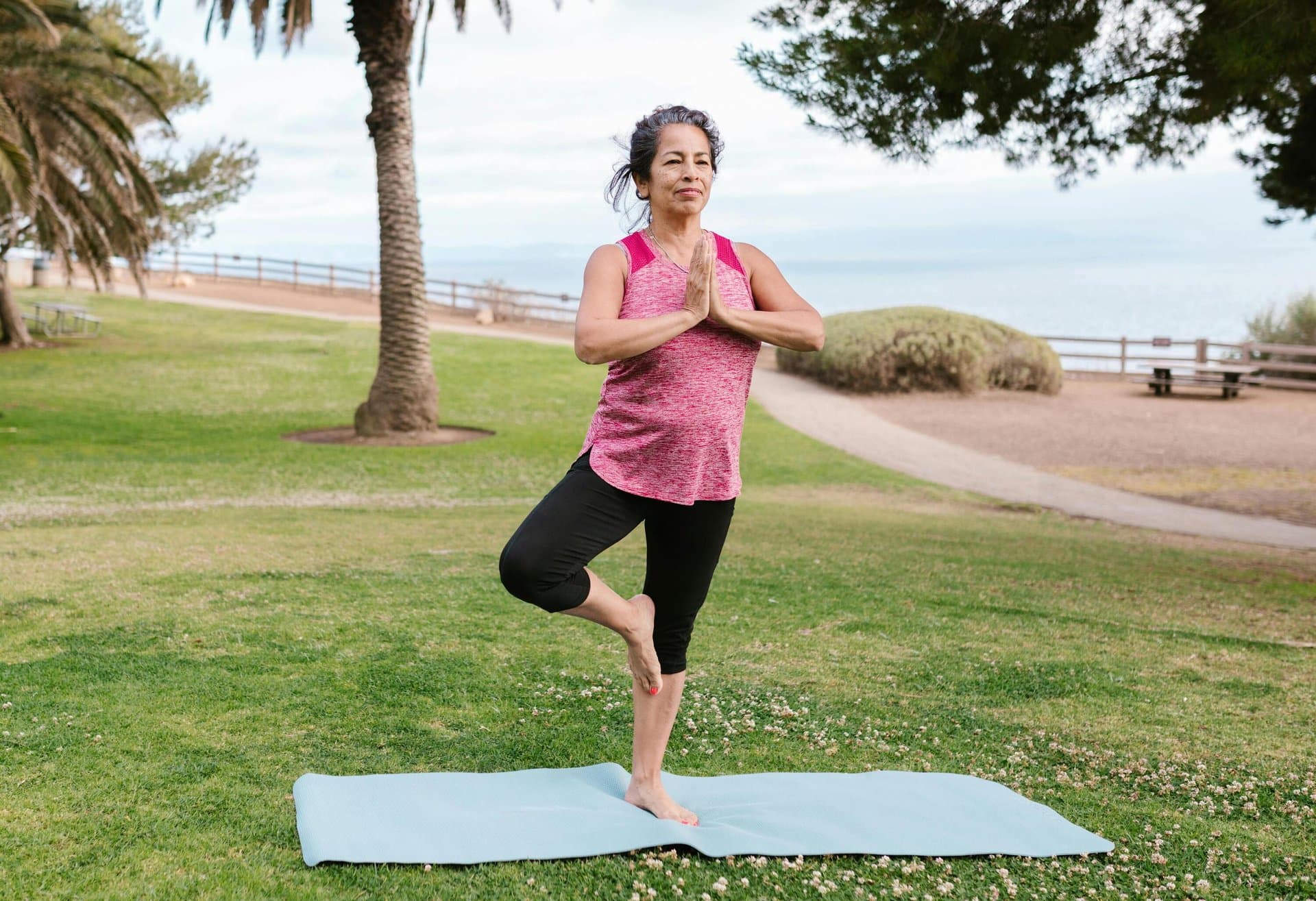
There is a lot of advice circulating right now about cortisol. Do not drink coffee for the first 90 minutes after waking. Get morning sunlight within 30 minutes of rising. Take ashwagandha. Avoid screens before 8am. Some of this is genuinely useful. But it is all reactive — it is about avoiding things that spike cortisol, rather than actively training the system that regulates it. A major review published in October 2026, pooling data from 44 clinical trials, found that of all exercise modalities tested — including HIIT, aerobic training, resistance work, and yoga — Qigong ranked second for cortisol reduction, and first for the consistency of that effect across populations. The morning is when cortisol peaks. That is where the opportunity is.
What Cortisol Actually Does (and When It Becomes a Problem)
Cortisol is not the villain it is often made out to be. The cortisol awakening response — the natural surge that occurs in the first 30 to 45 minutes after waking — is essential. It mobilises energy, sharpens attention, and prepares the body for the demands of the day. Without it, getting out of bed would be a physiological struggle rather than merely an inconvenient one.
The problem is not morning cortisol. The problem is cortisol that remains elevated throughout the day, fails to follow its natural declining arc, and spikes repeatedly in response to perceived threats — a difficult email, a traffic jam, a difficult conversation. This chronic dysregulation is what drives the fatigue-that-sleep-does-not-fix, the anxiety-without-obvious-cause, the belly fat that persists despite reasonable eating, and the immune suppression that leaves people catching everything that circulates.
The HPA axisCortisol is released by the adrenal glands in response to signals from the hypothalamic-pituitary-adrenal (HPA) axis — the same axis that also regulates thyroid function, reproductive hormones, and immune response. When the HPA axis is chronically activated, the downstream effects extend far beyond cortisol: sleep architecture deteriorates, inflammatory markers rise, blood sugar regulation becomes less stable, and the conversion of inactive thyroid hormone to its active form is impaired. Addressing cortisol regulation is not a cosmetic concern. It is fundamental to metabolic health.
Why most morning routines do not solve thisAvoiding coffee for 90 minutes reduces the additive cortisol spike from caffeine on top of the natural cortisol peak. Sunlight exposure helps anchor the circadian rhythm that governs the cortisol curve. These are real effects. But they do not train the HPA axis itself — the regulation system that determines how high cortisol spikes, how quickly it falls, and how reactive it is to daily stressors. That requires a practice that actively engages the parasympathetic nervous system and signals, repeatedly and consistently, that the body is safe. This is precisely what Qigong does.
What the 44-Trial Review Actually Found
The October 2026 review compared five categories of exercise for their effect on cortisol: yoga, Qigong, continuous aerobic exercise, high-intensity interval training, and multicomponent exercise programmes. Across the included trials, yoga ranked first for cortisol reduction. Qigong ranked second — and notably, with more consistent effects across different populations than yoga, which showed greater variation between studies.
The review's authors observed something important: the interventions that most effectively reduced cortisol were not the most intense. HIIT — which produces the greatest acute cortisol spike of any exercise modality — showed the least consistent benefit for chronic cortisol regulation. The finding was clear: managing cortisol depends more on the type and consistency of movement than on its intensity.
Heart rate variability — the upstream measureA 2020 meta-analysis of 24 randomised controlled trials found that Qigong practice significantly improved heart rate variability (HRV) alongside reducing cortisol. HRV is the measure that matters most here — it reflects the responsiveness and flexibility of the autonomic nervous system. High HRV means the body can shift efficiently between sympathetic activation and parasympathetic recovery. Low HRV means it is stuck. Improving HRV through consistent Qigong practice means the HPA axis becomes less reactive — cortisol spikes lower, falls faster, and the cumulative daily load reduces.
The morning timing advantageCortisol follows a strict diurnal rhythm. It peaks within 30–45 minutes of waking, then gradually declines through the day, reaching its lowest point around midnight. A consistent morning Qigong practice works with this rhythm rather than against it. It does not suppress the morning cortisol peak — which is healthy and necessary — but it trains the HPA axis to be less reactive throughout the day that follows. The regularity of the practice also supports circadian anchoring: a consistent sensory and physiological signal at the same time each morning reinforces the diurnal rhythms that cortisol regulation depends on.
If you'd like to follow this practice with guidance, our free Morning Energy Flow course is built around exactly this — gentle, breath-led movement in the morning that sets your autonomic tone for the rest of the day.
A Morning Qigong Practice for Cortisol Regulation
This practice takes 12–15 minutes. Do it before coffee, before screens, ideally before anything else demands your attention. The sequence moves from breath to movement to stillness — following the same arc as a healthy cortisol response: activation, expression, return to baseline.
Standing breath — 3 minutes. Stand with feet shoulder-width apart, knees soft, arms at your sides. Close your eyes or soften your gaze toward the floor. Breathe in through the nose for 4 counts, expanding the belly fully before the chest rises. Breathe out through the mouth for 6 counts — longer than the inhale, never forced. The extended exhale is the most direct lever you have for vagal activation. At the end of each exhale, notice the brief natural pause before the next breath. That pause is the parasympathetic window. You are not in a hurry. The day has not started yet. Stay here for 3 minutes.
Kidney patting — 2 minutes. Place the backs of both hands against your lower back, over the kidney region. Begin a gentle, continuous percussion — not firm, just rhythmic. In Qigong, the kidneys are considered the seat of the body's foundational energy, and the adrenal glands that produce cortisol sit directly atop them. This movement stimulates circulation to the adrenal region, supports lymphatic flow in the lower back, and signals the body — through consistent rhythmic touch — that it is in a state of care rather than emergency. Continue for 2 minutes with slow, steady breathing throughout.
Swaying tree — 3 minutes. Raise both arms slowly overhead on the inhale, letting them float up. On the exhale, begin to sway gently side to side — a slow lateral bend from the waist, arms overhead, the torso moving like a tree in a light breeze. Take 5–6 seconds in each direction. This movement mobilises the entire spine, opens the sides of the ribcage, and continues the parasympathetic shift of the opening breathwork. The rhythm of the movement naturally deepens the exhalation. If raising the arms overhead causes any discomfort, keep them at chest height instead.
Slow shoulder rolls with neck release — 2 minutes. Lower the arms and begin slow, full shoulder circles — backward for one minute, forward for one minute. Keep the movement large and unhurried. Then drop the chin gently toward the chest and hold for three slow breaths, feeling the stretch along the back of the neck. Return to centre. Chronic cortisol dysregulation tends to accumulate tension in the neck, upper trapezius, and jaw — this gentle mobilisation addresses the physical holding pattern directly.
Closing still standing — 3–5 minutes. Return to the opening position: feet rooted, arms at your sides, eyes closed. Breathe slowly. Notice any sensation of warmth, looseness, or settledness that the practice has produced. This closing stillness is not optional — it allows the autonomic nervous system to consolidate the parasympathetic shift the practice has created, and to carry some of that regulation into the morning that follows. If you have more time, extend this into 10 minutes of standing meditation. If the morning is demanding, 3 minutes is enough. The practice ends when you are ready.
Practical Notes
Before coffee, not after. The cortisol awakening response is at its peak in the first 30–45 minutes after waking. This is the optimal window for Qigong practice — not because you need to suppress the peak, but because engaging the parasympathetic system during the peak trains the HPA axis in the moment it is most responsive. Adding caffeine before the practice raises the cortisol baseline further and partially defeats the purpose. Practise first. Coffee second.
Consistency over duration. The cortisol-regulating effects of Qigong build over weeks and months of consistent practice. A 12-minute daily practice will produce better outcomes than a 45-minute practice twice a week. The HPA axis responds to regularity — the same signal, at the same time, day after day — as a reliable marker of safety. Irregular practice produces irregular results.
What to track. Keep a simple daily note — energy on waking (1–10), afternoon energy dip depth (1–10), and sleep quality (1–10). Track these before you start the practice and again at four and eight weeks. The changes with consistent morning Qigong tend to be gradual and cumulative: a morning that feels slightly more manageable, an afternoon that is slightly less flat, a sleep that is slightly deeper. These are the markers of HPA axis regulation improving. They are not dramatic, but they are durable.
Will this replace my cortisol supplements?
Adaptogenic supplements — ashwagandha, rhodiola, holy basil — work by modulating the HPA axis response to stress. They are not placebos; the evidence for ashwagandha in particular on cortisol and perceived stress is reasonably robust. But they work downstream of the nervous system, addressing the hormonal output rather than the regulatory system that drives it. Qigong works upstream — training the autonomic nervous system itself to be less reactive, so that the HPA axis is triggered less often and recovers more quickly. The two approaches are complementary. If you are using adaptogens and finding them helpful, continue. Adding morning Qigong addresses the part of the picture that supplements cannot reach.
I am not a morning person — does the timing matter?
The morning window is genuinely optimal for cortisol regulation because the cortisol awakening response is at its peak and the HPA axis is most responsive to parasympathetic input. But a consistent practice at any time of day will produce meaningful HRV and cortisol improvements compared to no practice. If mornings are genuinely unworkable, early afternoon — before the cortisol curve has fully flattened — is the next best option. Evening practice is valuable for sleep but less directly relevant to daytime cortisol regulation. The honest answer is: the best time to practise is the time you will actually do it, consistently, for months.
How is this different from yoga?
The October 2026 review found yoga ranked first for cortisol reduction across all exercise modalities, with Qigong in second place. The practical difference is in accessibility and format. Yoga involves a greater range of movement, more floor-based postures, and more variation in style — from restorative and yin at one end to Vinyasa and hot yoga at the other. The cortisol-lowering forms of yoga are the slow, restorative, and breath-focused styles, not the high-intensity ones. Qigong is consistently gentle by design: there is no high-intensity Qigong equivalent. For people who cannot get to the floor comfortably, who have joint limitations, or who find yoga's range of movement challenging, Qigong delivers comparable cortisol benefits entirely from a standing or seated position, in less time, with no mat required.