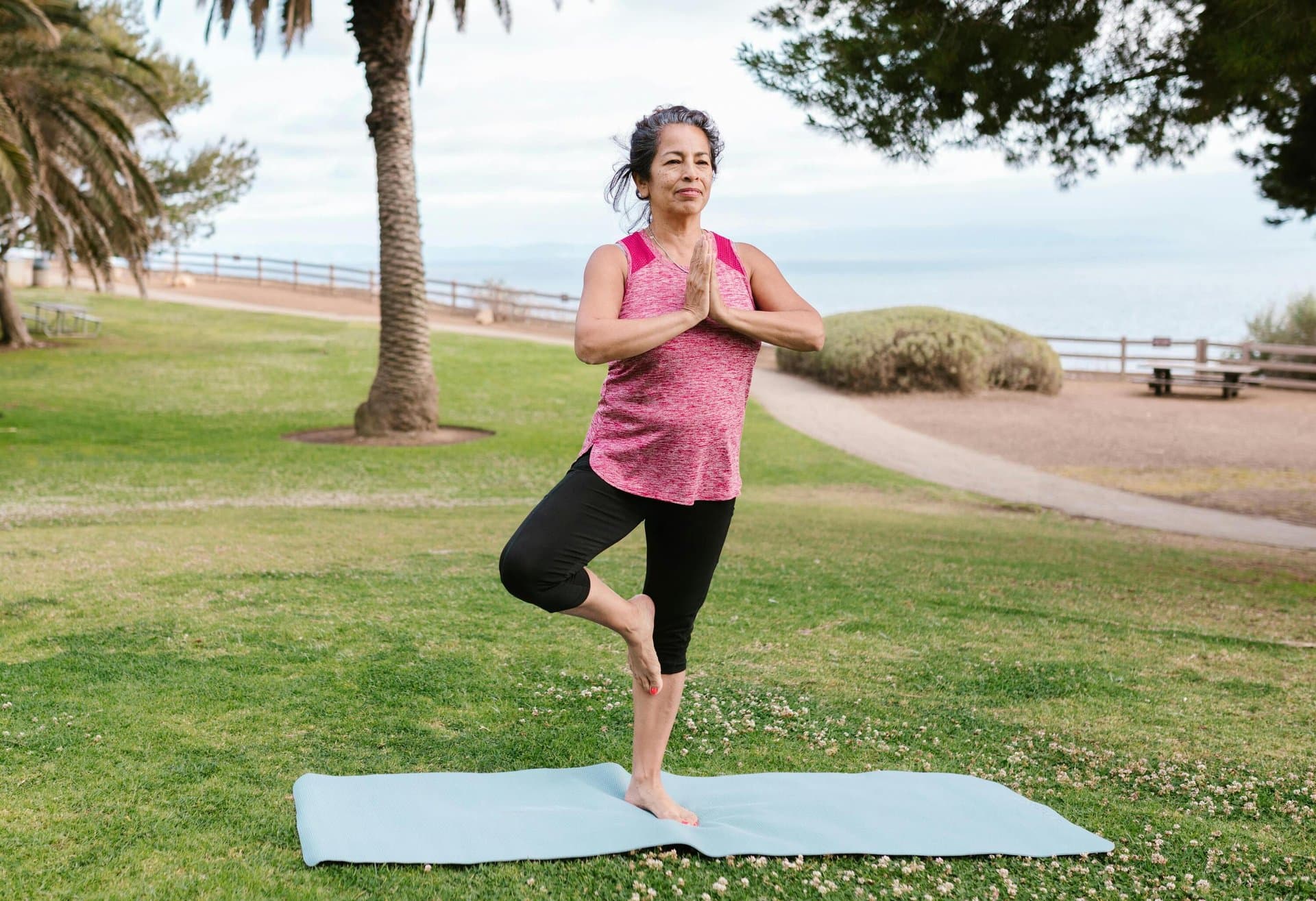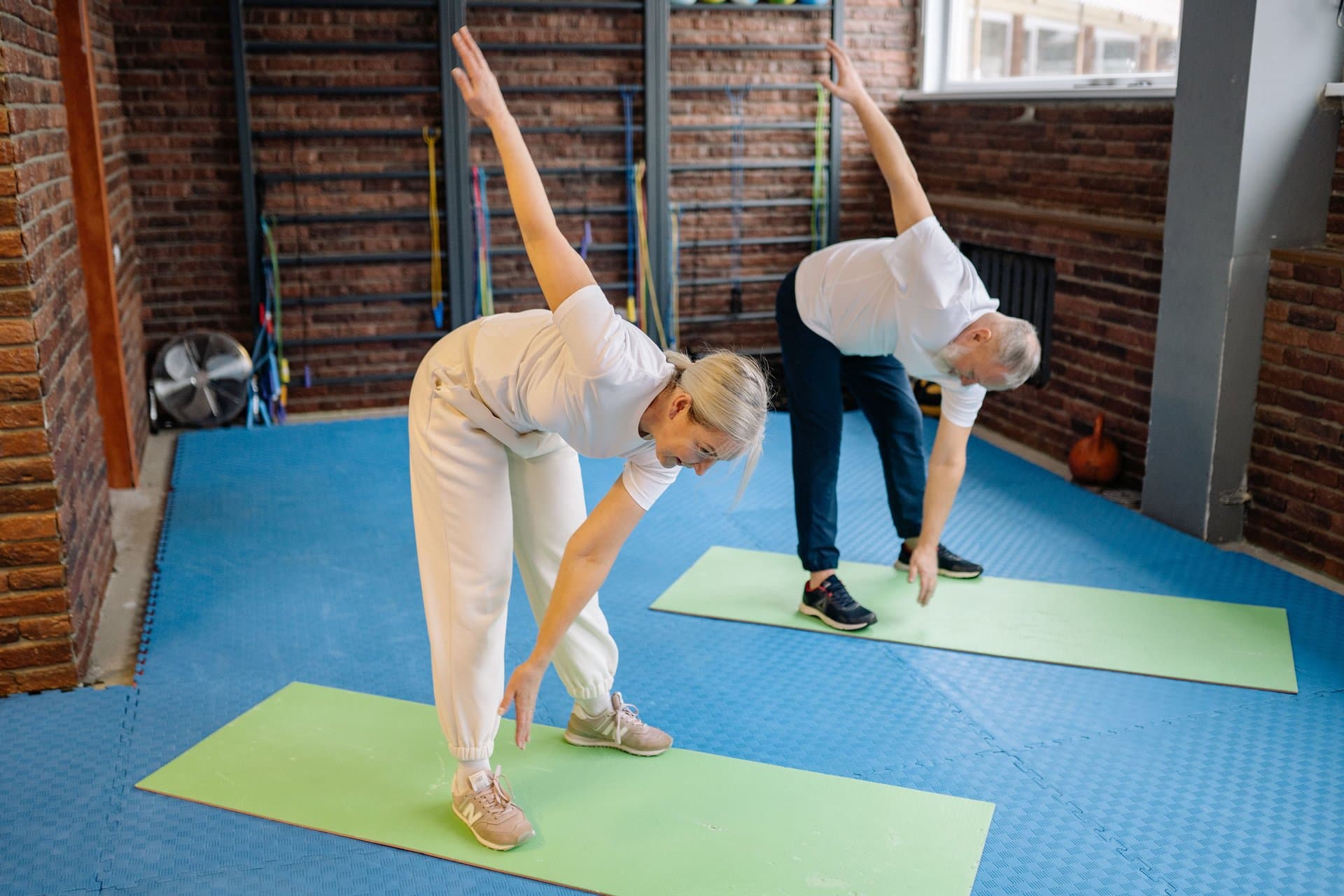
Mobility is one of those things you may not think much about until you notice it changing.
Getting out of a chair might feel a little harder. Reaching overhead may not feel as easy. Turning your head, getting down to the floor, or bending to put on your shoes can gradually become more restricted.
This does not mean that losing mobility is simply something you have to accept as you get older.
Regular movement can help you maintain the ability to move comfortably and confidently throughout everyday life. And you do not need complicated workouts to get started.
In this guide, we’ll look at how to improve mobility as you age and some simple movement habits you can build into your day.
What Is Mobility?
Mobility is your ability to move a joint or part of your body through a useful range of motion while maintaining control.
It is slightly different from flexibility.
Flexibility generally refers to how much a muscle or joint can stretch. Mobility also involves strength, coordination, balance and your ability to control the movement.
For example, having enough flexibility to raise your leg is one thing. Being able to lift your leg, control it and maintain your balance while doing so is mobility.
Good mobility helps with everyday movements such as:
Walking
Squatting down
Reaching overhead
Turning and looking behind you
Getting in and out of a chair
Climbing stairs
Bending and reaching
Getting up from the floor
Why Does Mobility Change With Age?
Several factors can contribute to changes in mobility as we get older.
One of the biggest is simply moving less.
If you spend many hours sitting each day, your body has fewer opportunities to move through its full range. Over time, certain movements can start to feel unfamiliar or uncomfortable.
Muscle strength can also change with age, particularly when it is not regularly maintained. Balance and coordination can change as well.
Previous injuries, joint problems and long periods of inactivity can further affect how comfortably you move.
The good news is that mobility is not simply about age.
Your daily movement habits matter too.
How to Improve Mobility as You Age
You do not need to stretch every muscle in your body for an hour each day.
Instead, focus on moving regularly and giving your major joints opportunities to move in different directions.
1. Move Your Joints Every Day
Simple joint movements can be an easy way to start.
Try slowly moving your:
Neck
Shoulders
Wrists
Spine
Hips
Knees
Ankles
The movements do not need to be large.
Gentle circles, controlled bends and comfortable rotations can help you become more aware of how your body moves.
The goal is not to force a joint into a deeper range. Move comfortably and gradually.
2. Break Up Long Periods of Sitting
One of the simplest mobility habits is also one of the easiest to overlook.
If you sit for long periods, get up regularly.
Walk around the room. Stretch your arms overhead. Move your ankles. Take a few slow steps and gently rotate your shoulders.
Even a couple of minutes of movement can be a useful reminder that your body does not need to stay in one position for hours at a time.
You can also connect movement breaks to things you already do, such as getting up to make a drink or taking a short walk after a meal.
3. Include More Than Stretching
Stretching can be useful, but mobility involves more than flexibility.
Your body also needs strength, balance and coordination.
Simple movements such as controlled squats to a chair, gentle weight shifting, heel raises and standing leg movements can help you practise moving with control.
If a particular exercise causes pain, reduce the range of movement or choose a different exercise.
4. Use Slow, Controlled Movement
You do not always need to move quickly to improve your physical fitness.
Slow movement gives you more time to notice your posture, balance, breathing and coordination.
This is one reason practices such as Qi Gong and Tai Chi can be useful additions to a movement routine. Their flowing movements encourage you to coordinate the whole body rather than isolating one muscle at a time.
If you enjoy having guidance rather than deciding what to practise each morning, our free Morning Energy Flow course provides a structured combination of gentle movement, breathwork and meditation to help you build a consistent daily rhythm.
A Simple 10-Minute Mobility Routine
You can also create a short routine yourself.
Try:
2 minutes: Gentle joint movements
Move your shoulders, neck, wrists and ankles slowly and comfortably.
2 minutes: Upper-body mobility
Reach your arms overhead, open the arms out to the sides and gently rotate through the upper back.
2 minutes: Lower-body movement
Practise gentle knee bends, heel raises and controlled weight shifting.
2 minutes: Walking
Walk around your home or outside, paying attention to your posture and the way your feet meet the ground.
2 minutes: Slow movement and breathing
Finish with a few gentle flowing movements while keeping your breathing relaxed.
The routine does not need to be perfect.
The important thing is giving your body regular opportunities to move.
Consistency Matters More Than Complexity
When people want to improve mobility, it is easy to look for the perfect routine.
But the best routine is often the one you will actually do.
Ten minutes every day can be more practical than an hour-long session that you only manage once a week.
You can also spread movement throughout your day rather than doing everything in one session.
Walk more.
Take the stairs when comfortable.
Stand up regularly.
Move your joints.
Practise balance.
Stretch gently.
Find activities you enjoy.
These small choices all contribute to a more active daily routine.
When Should You Be Careful?
Some stiffness or reduced range of movement is common, but persistent pain or a sudden change in mobility should not simply be blamed on getting older.
If you have significant joint pain, a recent injury, dizziness, unexplained weakness or difficulty with everyday movement, speak with a qualified healthcare professional before starting a new exercise routine.
Your movements should feel controlled and manageable. Mobility work should not require you to push through sharp or worsening pain.
Bringing It All Together
Improving mobility as you age is less about trying to become extremely flexible and more about maintaining your ability to move through everyday life with comfort and control.
Move your joints regularly.
Break up long periods of sitting.
Maintain strength and balance.
Practise controlled movement.
And most importantly, make movement a normal part of your day.
You do not have to wait until mobility becomes a problem before you start paying attention to it.
A few minutes of movement today can be a simple way to keep your body active, capable and connected to the movements you want to keep doing for years to come.
Frequently Asked Questions
Can you improve mobility as you age?
Yes. Regular movement can help you maintain and develop mobility at any age. Mobility can be influenced by activity levels, strength, balance, coordination and how regularly you move through different ranges of motion.
What are the best mobility exercises for older adults?
Useful options include gentle joint movements, controlled squats, heel raises, weight shifting, walking, balance exercises and flowing practices such as Qi Gong and Tai Chi. Choose movements that match your current ability and can be performed comfortably.
How often should I practise mobility exercises?
A little every day can be a practical approach. You can use a dedicated 10-minute routine or add short movement breaks throughout your day.
Is mobility the same as flexibility?
No. Flexibility is mainly about how much range you have, while mobility also involves strength, coordination and control within that range.