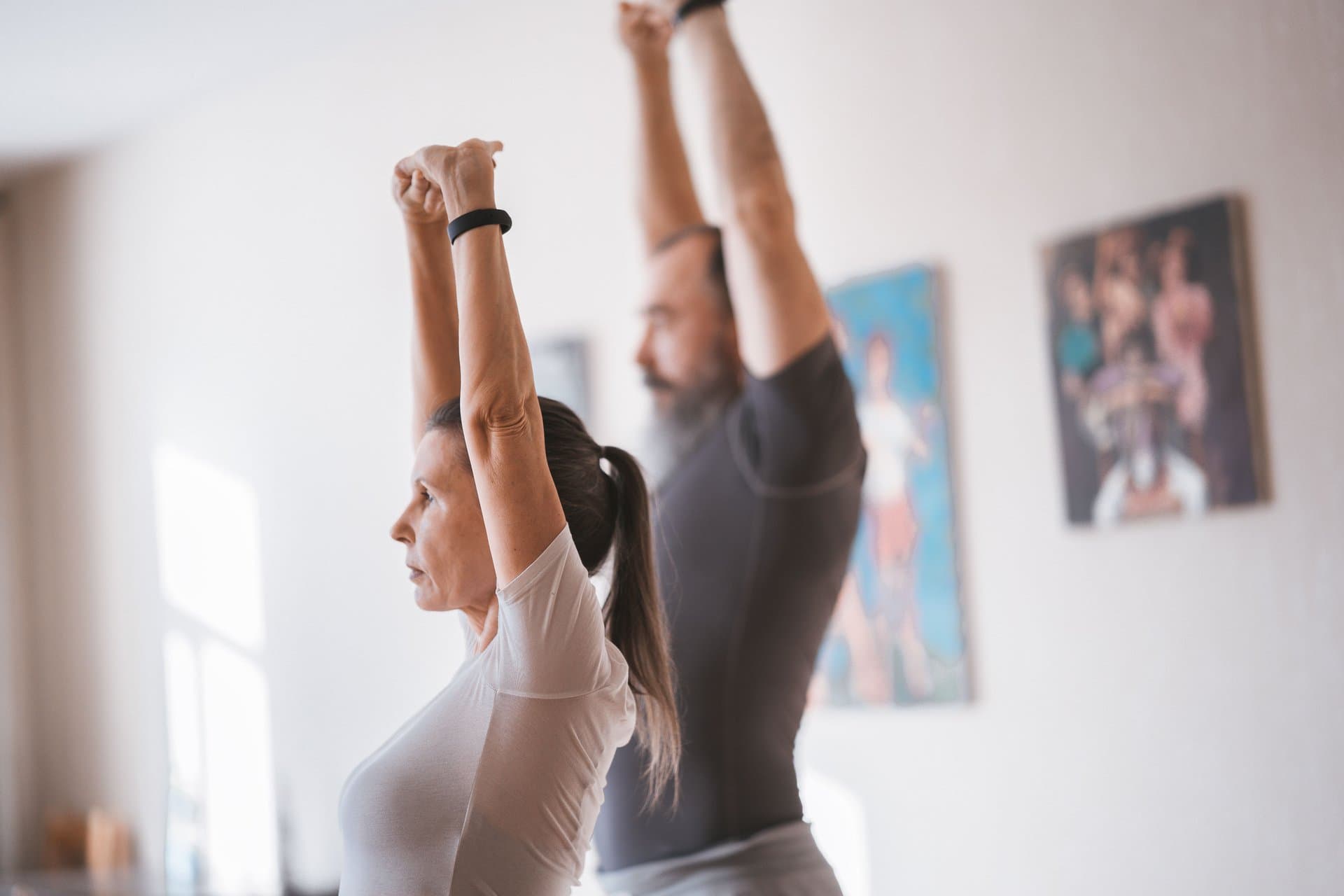
You stretch regularly, yet your body still feels tight.
Your shoulders may feel tense, your hips may feel restricted, or your back may feel stiff when you stand up after sitting. You might even finish a stretching session and wonder why you do not feel much different.
So why does your body feel tight even when you stretch?
The answer is that tightness is not caused by one thing. Muscles, joints, connective tissues, your nervous system, activity levels, previous injuries and the way you move can all influence how your body feels.
Stretching can certainly be useful, but it is not always the complete answer.
Stretching Can Help, But It Is Not the Whole Picture
Stretching can improve flexibility and increase your comfortable range of motion. However, having more flexibility does not automatically mean that your body will feel loose or that you will move more easily.
Mobility also involves strength, coordination, balance and your ability to control the range of movement you have.
You can therefore become more flexible without necessarily changing the habits or movement patterns that are contributing to your stiffness.
This is one reason it can be useful to combine stretching with regular movement rather than relying on stretching alone.
You May Simply Need to Move More
One of the most common reasons people feel stiff is spending too much time in one position.
Sitting at a desk, driving, watching television or working in the same posture for long periods gives your body relatively little opportunity to move through different ranges.
Your body can become accustomed to those positions.
The answer is not necessarily another long stretching session.
Sometimes you simply need to stand up and move.
Walk around the room.
Roll your shoulders.
Move your hips and ankles.
Reach your arms overhead.
Take a few comfortable breaths while changing position.
Small movement breaks can make a useful difference to how your body feels throughout the day.
You May Need More Than Flexibility
Think about what happens when you move normally.
You are not simply stretching a muscle. You are coordinating muscles, joints, connective tissues, balance and your nervous system at the same time.
This is why mobility exercises often involve controlled movement rather than simply holding stretches.
Try a few slow knee bends while holding the back of a sturdy chair.
Practise gentle heel raises.
Shift your weight from one foot to the other.
Reach in different directions.
Rotate your upper body comfortably.
These movements give your body an opportunity to practise using its available range rather than simply trying to increase it.
You Could Be Stretching Too Hard
Another possibility is that your stretching routine is simply too intense.
If every stretch becomes an attempt to push farther, you may end up focusing more on sensation than on quality of movement.
A stretch does not need to be uncomfortable to be useful.
Try reducing the intensity.
Slow the movement down.
Keep your breathing relaxed.
Notice whether you are tightening your jaw, shoulders or hands.
Instead of trying to force your body to loosen, give it time to settle into the movement.
Tightness Can Involve More Than the Muscles
The sensation of tightness does not always tell you exactly what is causing it.
Your muscles, joints, connective tissues and nervous system all contribute to how movement feels.
Fascia is part of this wider system. It surrounds and connects many structures throughout the body and contributes to mechanical force transmission and sensory awareness.
This is one reason a whole-body movement practice can sometimes feel different from isolated stretching.
A slow movement involving your arms, spine, hips and breathing gives your body a very different experience from holding one stretch for thirty seconds.
Stress Can Affect the Way You Hold Your Body
You may also be holding more tension than you realise.
When people are stressed, concentrating or under pressure, they can unconsciously tighten areas such as the shoulders, jaw, hands or abdomen.
Stretching may provide temporary relief, but the same tension can return if the underlying pattern continues.
This is where breathing and body awareness can become useful.
Pause for a moment.
Notice where you are holding tension.
Take a comfortable breath.
Relax your jaw.
Let your shoulders soften.
Then move slowly and see whether you can move with less unnecessary effort.
A Simple Five-Minute Alternative
The next time your body feels tight, try moving rather than immediately reaching for a longer stretch.
Spend a minute walking around.
Then make a few slow shoulder circles.
Gently rotate your upper body from side to side.
Move your hips and ankles through comfortable ranges.
Shift your weight from one foot to the other.
Finish with several relaxed breaths.
The goal is not to force a particular area to loosen.
It is simply to give your body some varied, comfortable movement.
If you enjoy a guided approach, our free Qigong for Lymphatic Drainage & Stress Relief course combines gentle flowing movement, breathwork and relaxation in a simple whole-body practice.
What About Fascia Release?
You may have come across the idea that feeling tight means your fascia is stuck and needs to be released.
Fascia is certainly involved in movement and tissue mechanics, and research into its role continues to develop.
But it is too simple to assume that every sensation of tightness is caused by fascia adhesions that need to be broken apart.
Stiffness can have many different causes, and a person's experience of tightness does not necessarily tell you which tissue is responsible.
This is why it can be more useful to think about the body as a connected system and explore different forms of movement rather than looking for one technique that fixes everything.
Build More Movement Into Your Day
If you regularly feel tight, take a look at how much you move between your formal exercise sessions.
Stand up regularly if you spend a lot of time sitting.
Take short walks.
Move your joints throughout the day.
Change position often.
Use stairs when they are appropriate for you.
Include some strength work as well as mobility and stretching.
You may find that these habits have more impact on how your body feels than simply adding more time to your stretching routine.
When Should You Get Professional Advice?
Occasional stiffness is common, but persistent or worsening symptoms deserve attention.
If tightness is accompanied by significant pain, weakness, swelling, numbness or unexplained changes in mobility, speak with a qualified healthcare professional.
The same applies if your stiffness began after an injury or surgery.
A new movement routine should feel manageable and controlled rather than painful.
Bringing It All Together
If your body feels tight even when you stretch, the answer may not be to stretch more.
You may need to move more often.
You may need to work on strength, mobility or coordination.
You may need to vary the positions your body spends time in.
Or you may benefit from slowing down and paying more attention to how you are holding tension.
Stretching is one useful tool, but it is only part of a healthy movement practice.
Combine it with walking, gentle whole-body movement, strength, breathing and body awareness.
The goal is not to make your body endlessly flexible.
It is to help everyday movement feel more comfortable, natural and enjoyable.
Frequently Asked Questions
Why am I still stiff after stretching?
Stretching can improve flexibility, but stiffness can also be influenced by prolonged sitting, activity levels, strength, joint mobility, previous injury and the way your body responds to movement.
Should I stretch more if my body feels tight?
Not necessarily. Try combining gentle stretching with regular movement, walking, strengthening and mobility exercises rather than simply increasing the amount of stretching.
Can stress make your body feel tight?
Stress can contribute to increased muscle tension and can affect how you hold your body. Slower movement, relaxed breathing and greater awareness may help you notice and reduce unnecessary tension.
Can fascia cause a feeling of tightness?
Fascia is involved in movement and sensory feedback, but tightness is not caused by fascia alone. Muscles, joints, connective tissues and the nervous system can all contribute to how movement feels.