What Is Ba Duan Jin?
Ba Duan Jin — often translated as the Eight Brocades or Eight Pieces of Silk — is one of the oldest Qigong sequences in existence. It dates back to the Song dynasty, over 1,000 years ago, and has been practised continuously ever since.
The name refers to eight distinct movements, each designed to work a specific part of the body — stretching the spine, opening the chest, strengthening the legs, stimulating the organs, and clearing stagnation from the joints and meridians.
Unlike more complex Tai Chi forms, Ba Duan Jin is straightforward enough to learn from home. Each movement is repeated several times, the sequence takes under ten minutes, and there are no transitions to memorise. That simplicity is part of why it has lasted so long.
Why It's Trending Now
Ba Duan Jin has seen a remarkable surge in interest in the West over the past year. Much of this is driven by the "Becoming Chinese" wellness trend — a broader movement of people exploring traditional Chinese health practices, from herbal teas and acupressure to morning routines rooted in Chinese medicine.
Short-form videos demonstrating Ba Duan Jin have accumulated billions of views on TikTok. Western practitioners — many of them young — are reporting improvements in posture, energy levels, digestion, and sleep after just a few weeks of consistent practice.
The interest isn't coming from the Tai Chi or Qigong community. It's coming from people who've never practised either — people who stumbled across the sequence and were surprised by how good it made them feel.
The Eight Movements and What They Do
Each movement in Ba Duan Jin has a traditional name and a traditional function. Modern research is beginning to support what Chinese practitioners have observed for centuries.
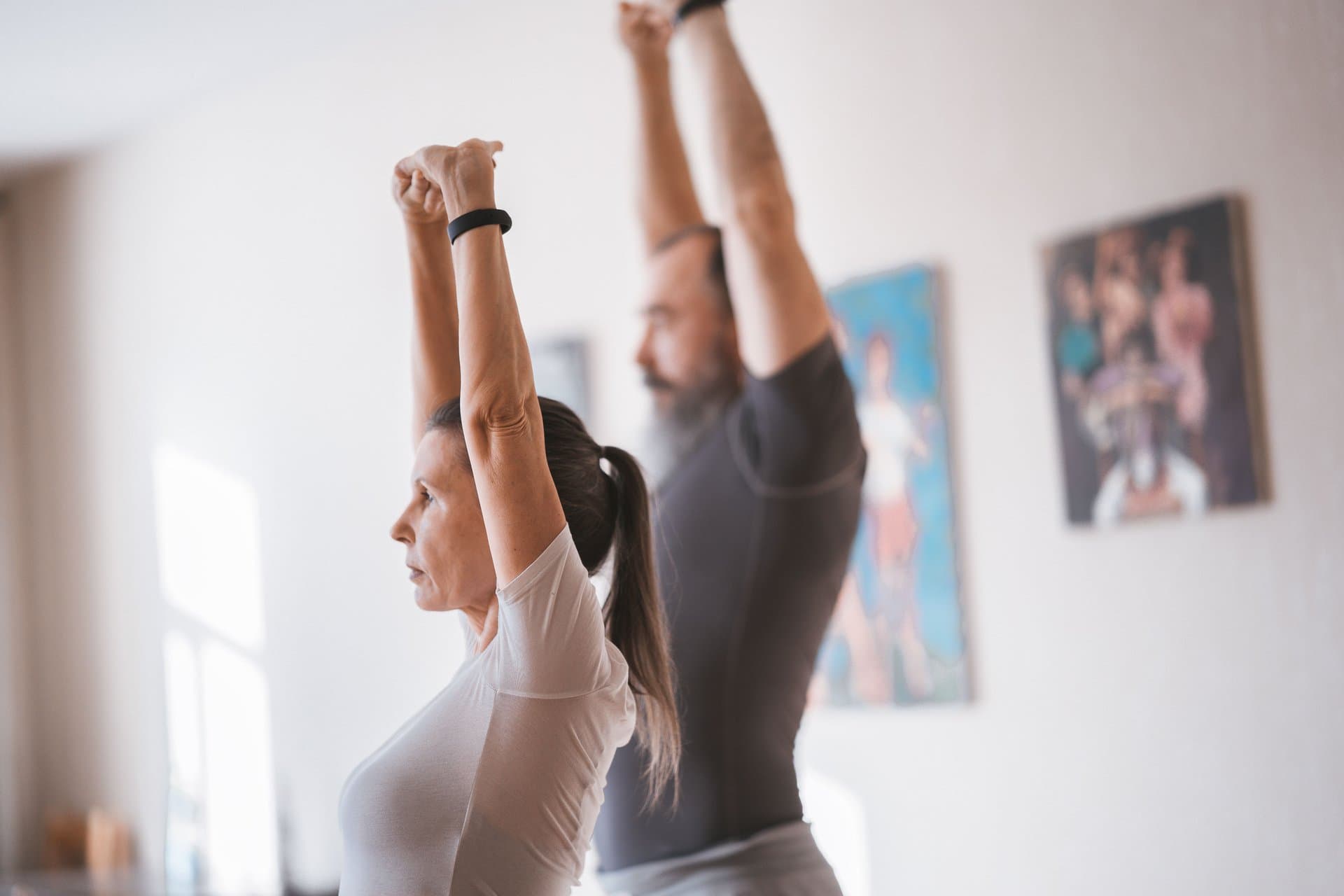
Movement 1: Supporting the Sky with Both HandsArms rise overhead, palms pressing upward, as the spine lengthens and the chest opens. This stretches the thoracic spine and stimulates the Triple Warmer meridian — associated in Chinese medicine with regulating body temperature and digestion.
Movement 2: Drawing the BowMimics the action of pulling a bowstring, alternating sides. Opens the chest, stretches the pectoral muscles, and stimulates the Lung and Large Intestine meridians along the arms.
Movement 3: Separating Heaven and EarthOne palm presses up, one presses down, stretching the torso laterally. Massages the Stomach and Spleen meridians, and is traditionally associated with improving digestion.
Movement 4: Looking Backward Like a Wise OwlSlow neck rotation from side to side while the arms press back. Releases tension in the cervical spine and is said to stimulate the small intestine and heart meridians through the shoulder and arm.
Movement 5: Swinging the Head and Lowering the TailboneA deep squat with a gentle swinging motion, decompressing the lumbar spine and releasing heat from the heart. Strengthens the quadriceps and hip flexors significantly.
Movement 6: Two Hands Hold the FeetBending forward to touch the feet, then straightening. Stretches the entire posterior chain — hamstrings, glutes, spinal erectors — and stimulates the Kidney and Bladder meridians along the back of the legs.
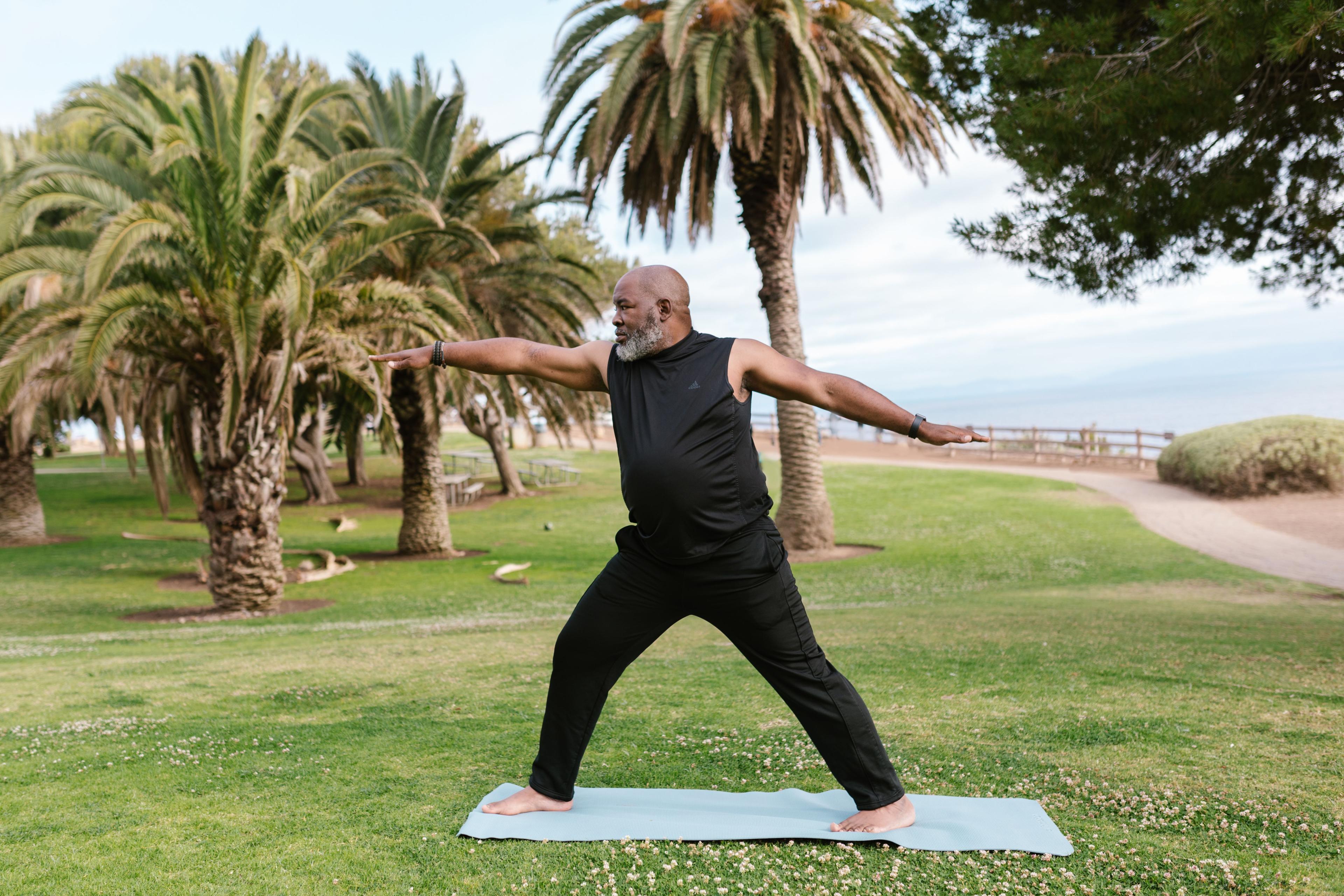
Movement 7: Punching with Angry EyesA wide horse stance with slow punches, holding an intense gaze. Activates the Liver meridian and is traditionally said to build internal strength and dispel stagnant qi.
Movement 8: Bouncing on the HeelsRising onto the toes, then dropping the heels gently to the floor. The subtle vibration is thought to stimulate all twelve meridians simultaneously and settle the nervous system. It ends the sequence.
Ba Duan Jin and Lymphatic Flow
One of the reasons Ba Duan Jin has attracted so much interest is its effect on circulation — particularly lymphatic circulation.
The lymphatic system has no pump of its own. It depends entirely on movement — specifically on the compression and release of muscles and fascia, the action of breathing, and gentle vibration through the body. Ba Duan Jin provides all three.
The heel drops in Movement 8 create a gentle percussive vibration that travels up through the skeleton and surrounding soft tissue. The deep stretches in Movements 2, 3, and 6 compress and release the large lymph nodes in the armpits, groin, and behind the knees. The slow, full breathing required throughout the sequence drives the thoracic duct — the body's main lymphatic channel — far more effectively than shallow chest breathing.
Several of our most-read posts explore this connection in depth. If this interests you, see our guide to Chinese movements for lymphatic drainage, and our piece on Chinese lymphatic detox and fascia release.
If you'd like a guided practice to follow along with, we have a free course — Qigong for Lymphatic Drainage & Stress Relief.
Ba Duan Jin and Fascia
Fascia — the connective tissue that wraps every muscle, organ, and bone — responds to slow, sustained stretching far better than fast, forceful movement.
Ba Duan Jin is built entirely around slow, sustained stretches. Each movement is held at the end range for a breath or two before releasing. This is precisely the stimulus that allows fascia to hydrate, reorganise, and release adhesions that build up from sedentary work, repetitive stress, or old injuries.
The sequence works the fascial lines that commonly become restricted in modern life — the superficial back line (addressed by Movement 6), the spiral line (addressed by Movements 4 and 7), and the deep front line (addressed by Movements 1 and 3).
For more on how Chinese practices address the fascia specifically, see our post on Baduanjin, Qigong, fascia release, and lymphatic flow.
A Complete Ba Duan Jin Practice
The full sequence below can be completed in 8–12 minutes. Move slowly enough that you can breathe deeply throughout each movement.
Before you begin: Stand with feet shoulder-width apart. Take three slow breaths, letting the exhale be twice as long as the inhale. Feel your feet on the floor.
Movement 1 — Supporting the Sky: Interlace fingers below the navel. Inhale as you raise them overhead, turning palms upward. Press gently upward and stretch. Exhale as you lower. Repeat 8 times.
Movement 2 — Drawing the Bow: Step into a wide stance. Extend one arm as if holding a bow, draw the other elbow back as if pulling the string. Hold for a breath. Switch sides. Repeat 4 times each side.
Movement 3 — Separating Heaven and Earth: One palm presses overhead, one presses down toward the floor. Breathe into the stretch along your side. Alternate sides. Repeat 4 times each side.
Movement 4 — The Wise Owl: Place hands on thighs, press arms back slightly to open the chest. Slowly turn the head to look behind you over one shoulder. Return to centre. Repeat 4 times each side.
Movement 5 — Swing and Squat: Lower into a wide squat, hands on thighs. Slowly swing the upper body from side to side, letting the head follow. Straighten and repeat. 4 times each direction.
Movement 6 — Holding the Feet: Stand with feet close together. Slide hands down your legs toward your feet, hinging at the hips. Hold the furthest comfortable point for a breath. Roll back up slowly. Repeat 8 times.
Movement 7 — Punching with Angry Eyes: Drop into a wide horse stance. Extend one fist slowly forward while the other draws back. Hold the gaze steady and intense. Alternate sides. Repeat 4 times each side.
Movement 8 — Heel Drops: Feet together. Rise onto the toes slowly. Pause. Let the heels drop firmly but not harshly to the floor. Feel the vibration settle through the body. Repeat 7 times.
Close by standing quietly for a moment, hands resting over the lower abdomen, and taking three slow breaths.
Who Ba Duan Jin Is Best Suited For
Ba Duan Jin is genuinely appropriate for a wide range of people, but it's particularly well-suited for:
People with desk-based lifestyles. The sequence directly addresses the postural patterns that develop from sitting — forward head posture, tight hip flexors, compressed lumbar spine, restricted thoracic rotation.
People over 50. The movements require no floor work and can be performed standing or with modifications. The emphasis on balance, spinal mobility, and deep breathing aligns well with the health priorities of this age group.
People new to Qigong or Tai Chi. There are no complex transitions. Each of the eight movements is self-contained. Most people can learn the full sequence in a single session.
People recovering from illness or surgery. The gentle nature of Ba Duan Jin makes it suitable during recovery phases where more demanding exercise isn't yet appropriate. Always consult your healthcare provider before beginning.
Frequently Asked Questions
How long does Ba Duan Jin take to learn?
Most people can learn all eight movements in one or two sessions of about 30 minutes each. The movements are repetitive and symmetrical, which makes them easier to retain than longer Tai Chi forms.
How often should I practise?
Daily practice produces the most noticeable results. Even a single run-through of the sequence — 8–12 minutes — is enough to maintain the benefits. Many practitioners do it first thing in the morning before the day begins.
Is Ba Duan Jin the same as Qigong?
Ba Duan Jin is a specific Qigong form. Qigong is the broader category — it encompasses hundreds of different exercises and sequences from the Chinese health tradition. Ba Duan Jin is one of the most well-known and widely practised of these sequences.
Can Ba Duan Jin be done seated?
Yes. Several of the movements — particularly Movements 1, 3, 4, and 7 — can be adapted for seated practice. If mobility is limited, our Chair Wellness course offers a fully adapted practice.
Does Ba Duan Jin actually improve health, or is it just relaxation?
Both. The relaxation effect is real and measurable — regular practice reduces cortisol, lowers resting heart rate, and improves sleep quality in most practitioners. But the physical effects are also real: improved spinal mobility, stronger legs, better balance, and — based on emerging research — improved lymphatic circulation and immune function.