Meditation does not always have to happen sitting still with your eyes closed.
Mindful walking meditation brings the same principles of awareness into movement, using the simple act of walking to help you reconnect with your body and surroundings.
For many people, sitting meditation can feel difficult when the mind is restless or the body is carrying tension.
Walking offers another way in.
Each step becomes something to notice.
The movement of the feet, the rhythm of the breath and the sensations around you can all become part of the practice.
Why Walking Can Be a Form of Meditation
Much of modern life happens inside the mind.
We think about what happened yesterday, what needs to happen tomorrow and everything we still need to do.
Walking meditation encourages you to return to what is happening now.
You do not need to stop thinking completely.
Instead, you practise noticing when your attention has drifted and gently bringing it back to your body and surroundings.
Mindful walking meditation can help bring awareness to:
The sensation of your feet meeting the ground
The movement of your legs and body
Your breathing
Sounds around you
Light, temperature and other sensations
The space around you
This combination of movement and awareness can make the practice feel particularly grounding.
The Mind-Body Benefits of Mindful Walking Meditation
Walking already provides many benefits for physical health.
Adding mindfulness can change the way you experience the movement.
Instead of walking while absorbed in your phone or thoughts, you deliberately bring attention back to your body.
This can support mindfulness for stress relief by creating a break from constant mental activity.
Walking may also help with chronic physical tension.
When people feel stressed, they often unconsciously tighten their shoulders, jaw, hands and other areas of the body.
Slow, relaxed movement creates an opportunity to notice these patterns.
You might realise that your shoulders are raised.
Your hands are clenched.
Your breathing has become shallow.
The practice is then not about forcing yourself to relax.
It is about noticing and allowing the body to soften where possible.
This is one reason walking can work well as a gentle form of somatic movement for chronic tension.
How to Practise Mindful Walking Meditation
You can practise almost anywhere.
A quiet park or natural setting can be particularly enjoyable, but you do not need to live near a forest or beach.
A garden, pavement or quiet room can work just as well.
Begin by Slowing Down
Start walking at a comfortable pace.
You do not need to walk extremely slowly unless you want to.
Allow your pace to feel natural.
Take a few moments to notice your posture and breathing.
Let your arms move comfortably.
Notice Your Feet
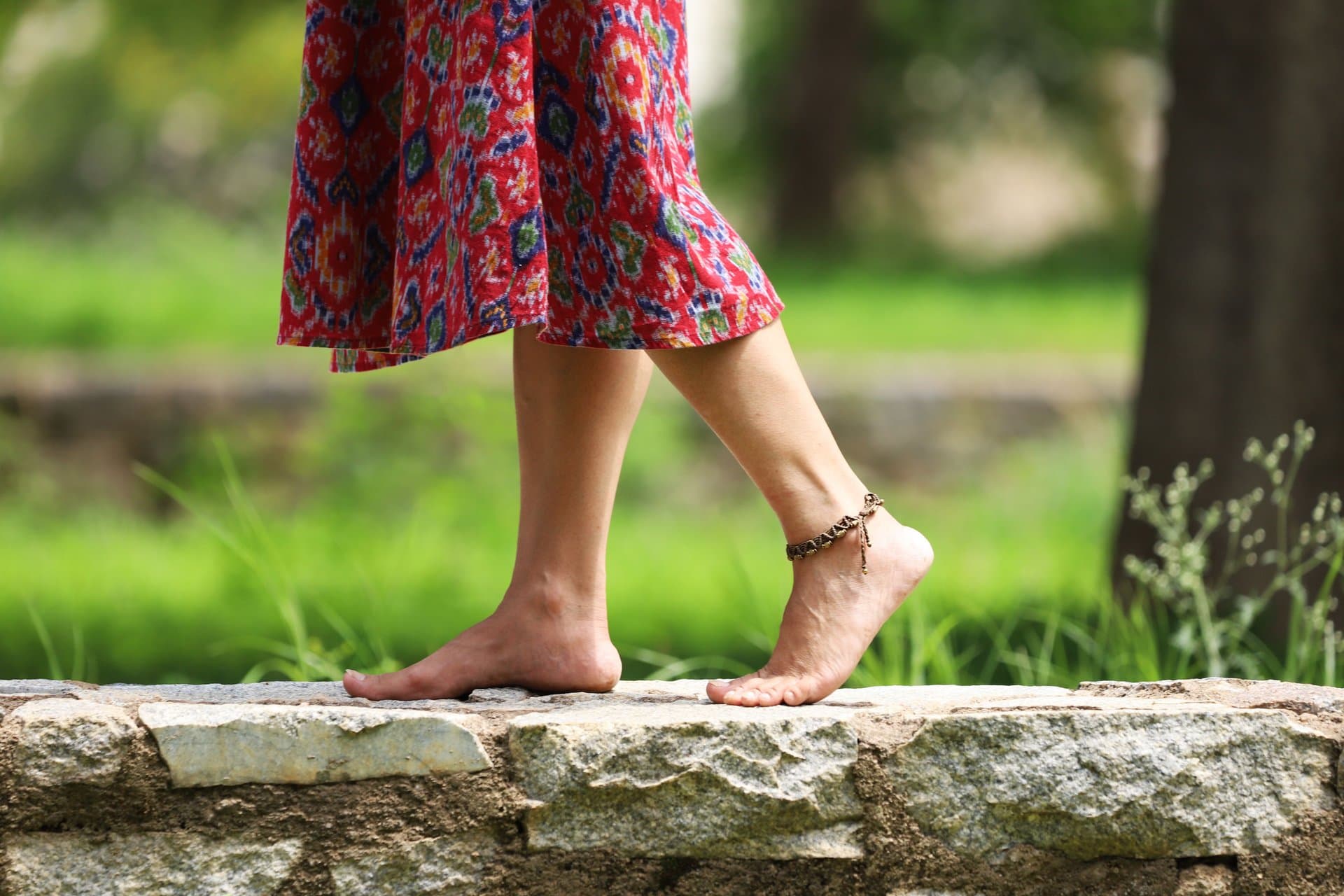
Bring your attention towards your feet.
Notice:
The heel touching the ground
The weight moving through the foot
The sensation of pushing away from the ground
The shift of weight onto the other leg
You do not need to analyse every step.
Simply notice the general experience of walking.
When your mind wanders, gently return to the sensation of your feet.
Include Your Breath
Allow your breathing to continue naturally.
There is no need to coordinate every breath with a certain number of steps.
Simply notice the rhythm.
Some people naturally find that their breathing becomes slower as they pay attention to the movement.
If this happens, let it happen.
Avoid forcing your breath into a particular pattern.
Expand Your Awareness
Once you feel settled, gradually become aware of your surroundings.
Notice the sounds around you.
Feel the temperature of the air.
Notice the light and movement around you.
You can allow your vision to soften slightly rather than staring intensely at one point.
This broader awareness can help you feel more connected to your environment.
Walking Meditation in Nature
Walking meditation in nature can add another dimension to the practice.
Natural environments provide sounds, textures and visual details that can easily bring your attention into the present moment.
You might notice:
The sound of leaves moving
Birds or insects
Changes in the ground beneath your feet
The feeling of sunlight or wind
Different colours and shapes around you
You do not need to identify or judge what you are seeing.
Simply notice.
Nature can provide a useful break from screens, noise and constant information.
But the goal of mindful walking meditation is not dependent on being in a beautiful location.
The practice is about how you pay attention.
A quiet street or local park can be enough.
Combining Walking With Loving-Kindness
Walking can also be combined with loving-kindness meditation for burnout.
Loving-kindness, often known as Metta meditation, involves intentionally cultivating feelings of kindness and goodwill towards yourself and others.
While walking, you can quietly repeat simple phrases such as:
May I be safe
May I be healthy
May I be peaceful
May I live with greater ease
You can then extend these wishes towards other people.
The practice does not require you to force yourself to feel happy.
It simply gives you an opportunity to practise a different mental direction.
This can be particularly valuable when burnout or chronic stress has made you overly self-critical.
As we explored in our guide on how to improve emotional fitness, emotional wellbeing is not only about feeling positive all the time.
It is also about developing awareness, resilience and a healthier relationship with difficult experiences.
Mindful Walking and Healthy Ageing
Walking is also one of the most accessible forms of regular movement.
As we get older, maintaining the habit of moving regularly can support mobility, confidence and independence.
Mindfulness can make walking more intentional.
You become more aware of how your feet are moving.
You notice your posture.
You pay attention to changes in balance and coordination.
This awareness can complement exercises designed to support better balance and fall prevention.
Our Fall Prevention & Better Balance course brings together gentle movement practices with practical lifestyle modifications to help support balance, mobility and confidence in everyday life.
For people who are interested in healthy ageing, mindful movement can also become part of a broader approach to wellbeing.
Our guide on daily longevity meditation explores how regular mindfulness practices can support long-term mental and emotional wellbeing.
Frequently Asked Questions
What if my mind keeps wandering?
That is completely normal.
The goal is not to prevent thoughts.
Each time you notice that your attention has wandered, gently return to your feet, breath or surroundings.
That moment of noticing is part of the practice.
How long should mindful walking meditation last?
Even five or ten minutes can be useful.
You can gradually practise for longer if you enjoy it.
Consistency is usually more important than duration.
Do I need to walk slowly?
No.
You can walk at a natural, comfortable pace.
The key is awareness rather than speed.
Can I practise indoors?
Yes.
You can walk slowly around a room, hallway or other safe space.
Pay attention to the sensation of movement and the shifting of your weight.
Bringing It All Together
Mindful walking meditation offers a simple reminder that mindfulness does not have to be separate from everyday life.
You do not need a special room.
You do not need perfect silence.
You simply need to walk and occasionally return your attention to what is happening.
Feel your feet.
Notice your breath.
Look around you.
Allow your body to move.
Whether you practise for five minutes in a local park or incorporate awareness into your daily walk, mindful movement can become a simple way to create more space in a busy day.